Home › Guide › Example: tailor
🧵 Example: Abu Salim Tailoring
Abu Salim is a tailor: he makes suits and shirts to measure, hems trousers, alters dresses, and sells fabric by the metre. His customers pay a deposit when they order and the rest on collection. Here he sets up his book with the eight steps of Step by step, then we follow two weeks of his work and what each section shows him. All names and figures are made up.
1. First setup
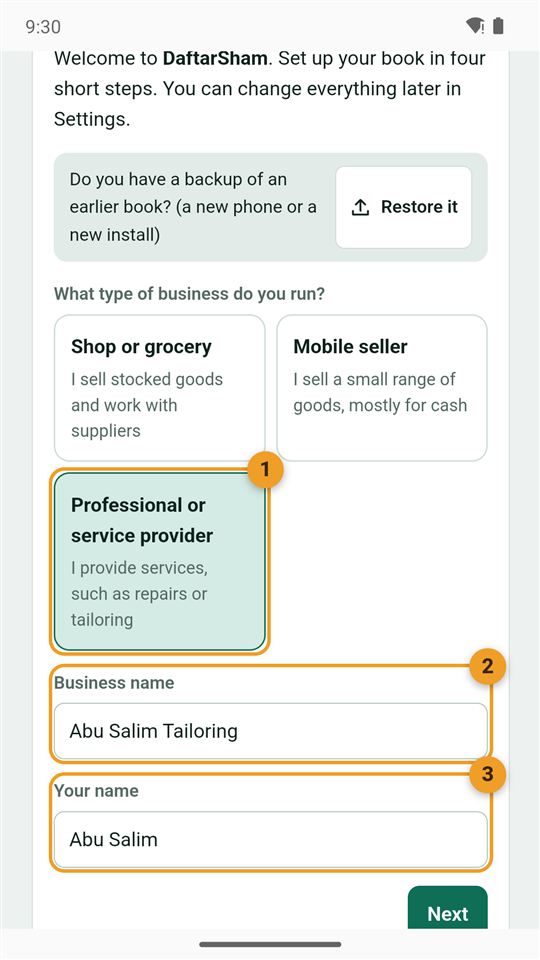
- "Professional or service provider": tailoring is mostly labour, and the stock pages appear on their own once he uses fabric.
- Business name: "Abu Salim Tailoring".
- His name: "Abu Salim".
Then the US dollar, $150 in the cash box, and the "Simple" mode.
2. Shop details
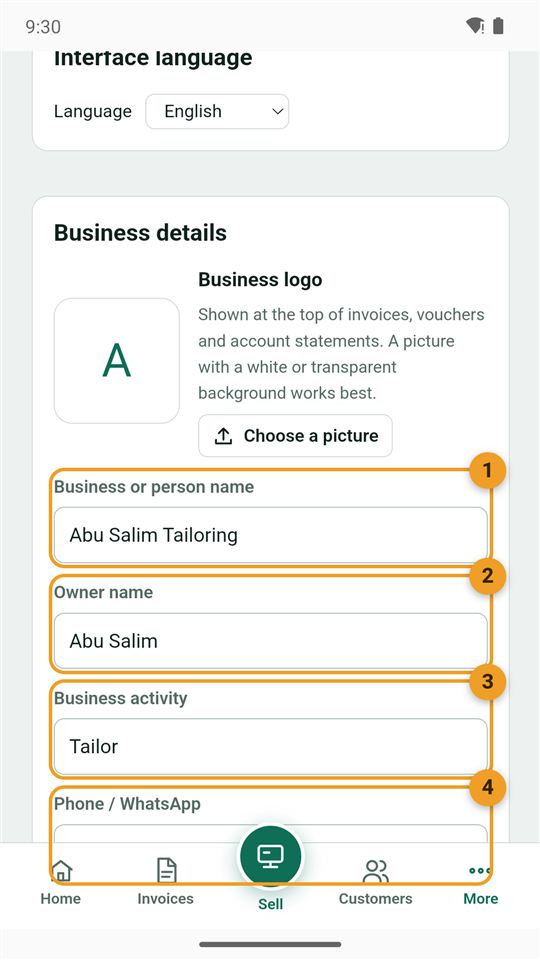
- The name.
- The owner.
- The activity: "Tailor".
- The phone / WhatsApp, shown at the top of every invoice.
3. Currency
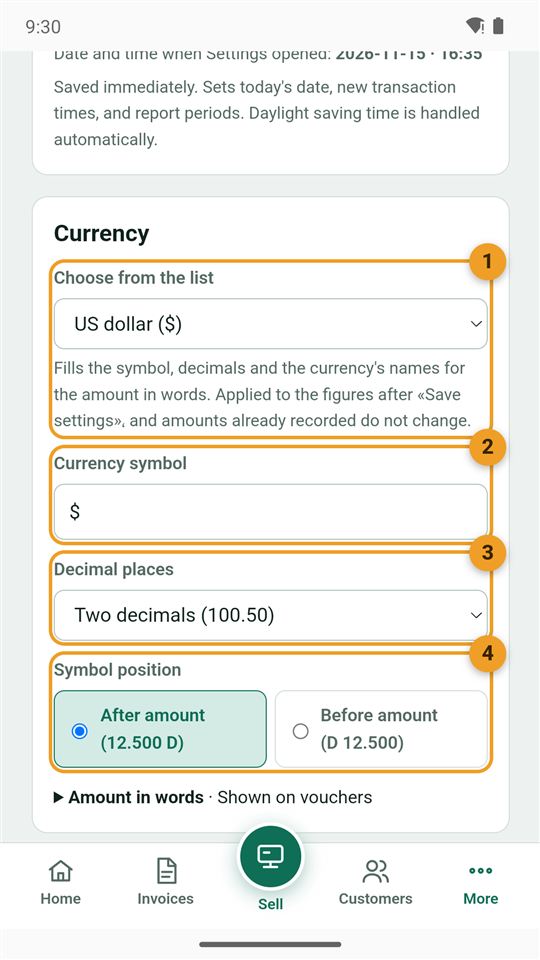
- The US dollar from the list.
- The symbol $.
- Two decimals.
- The symbol after the amount.
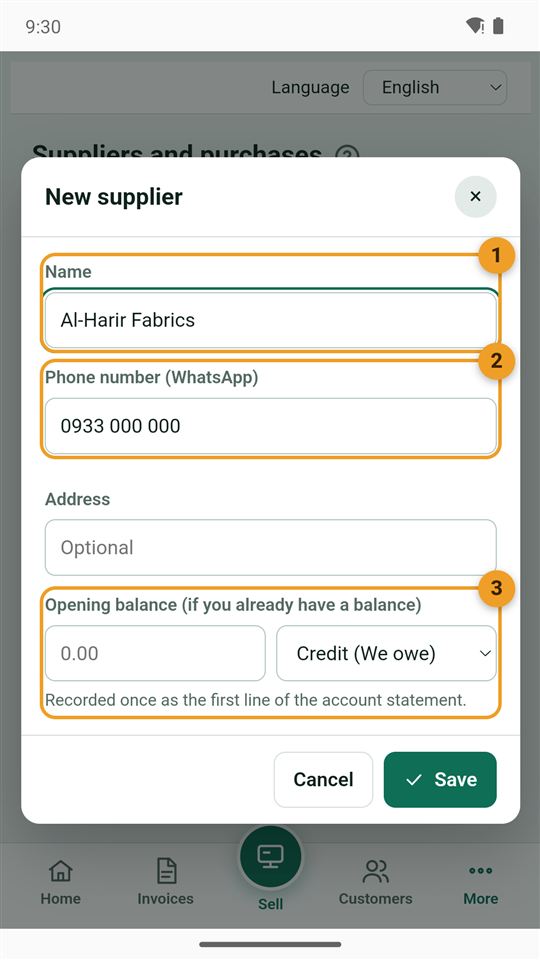
4. The supplier
- Name: "Al-Harir Fabrics".
- The phone, to order fabric.
- Opening balance: none.
5. Categories
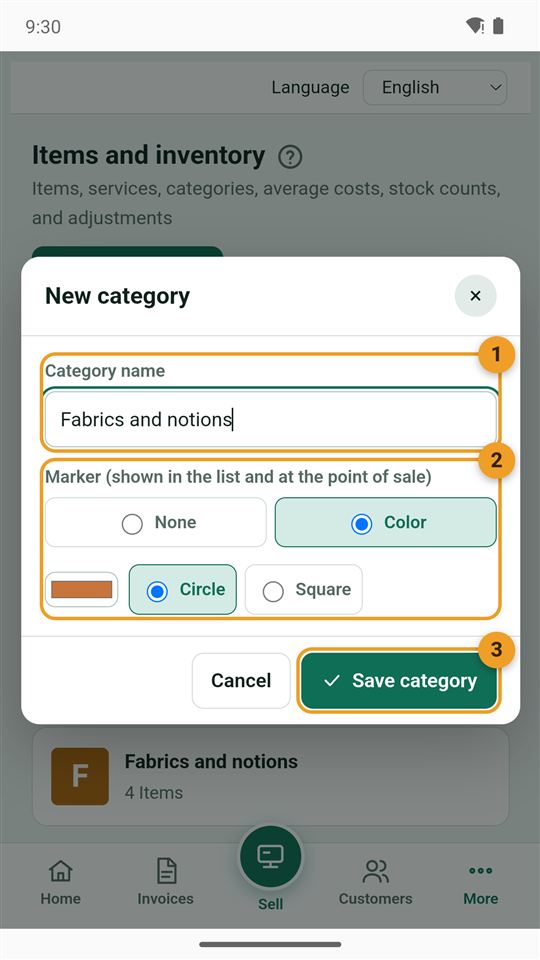
Two categories: "Tailoring work" for labour, and "Fabrics and notions" for what he sells:
- The category name.
- Its colour and shape.
- Save category.
6. Services and fabrics
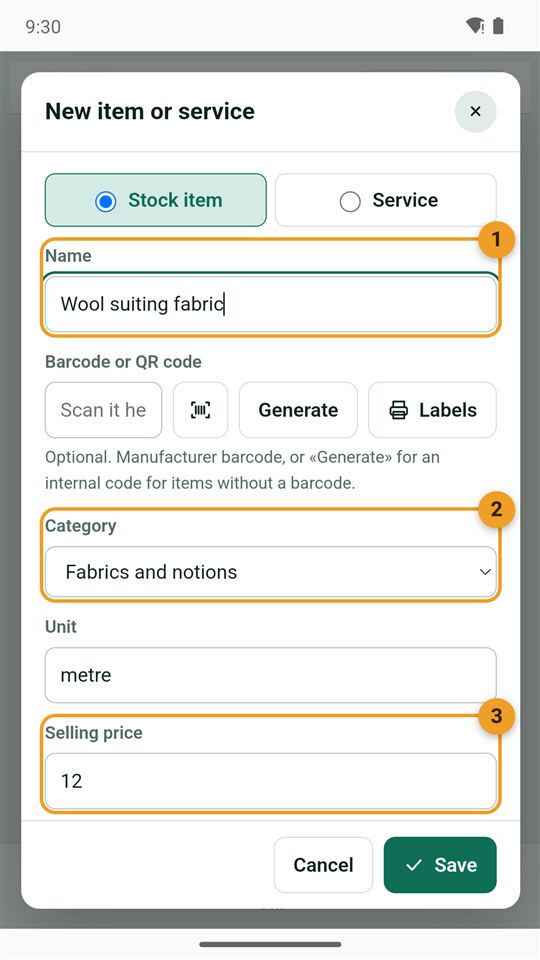
- Services: men's suit made to measure $60, shirt $12, trouser hemming $3, dress alteration $8.
- Fabrics and notions: wool suiting and cotton shirting by the metre, zips and button sets by the piece.
- Name: Wool suiting fabric, with the unit: metre.
- Category: Fabrics and notions.
- Price per metre $12, cost $8.
7. Fabric from a purchase invoice
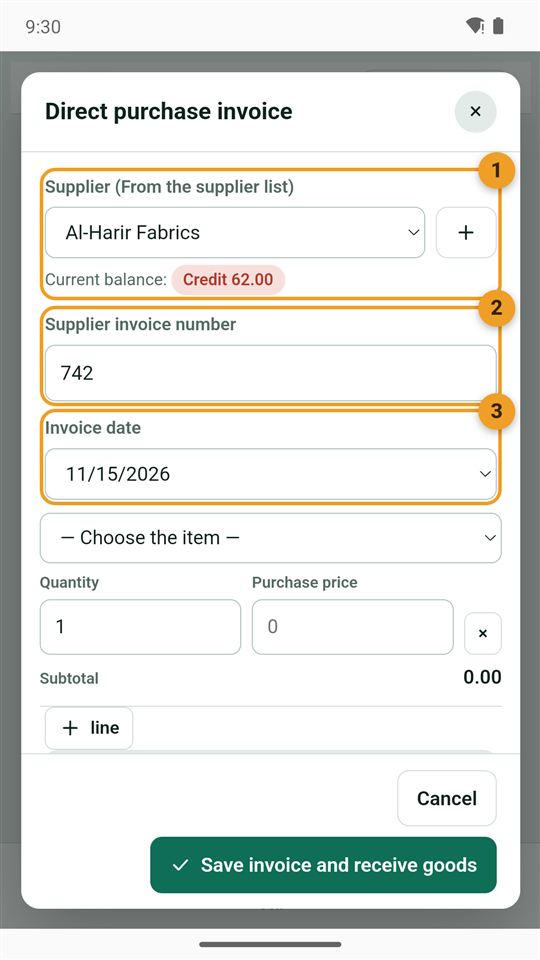
- The supplier: Al-Harir Fabrics.
- Their invoice number: 742.
- The date.
10 metres of wool at $8, 30 metres of cotton at $3, 20 zips and 20 button sets: $182 in all. He paid $120 and still owes $62.
8. The first order: a suit
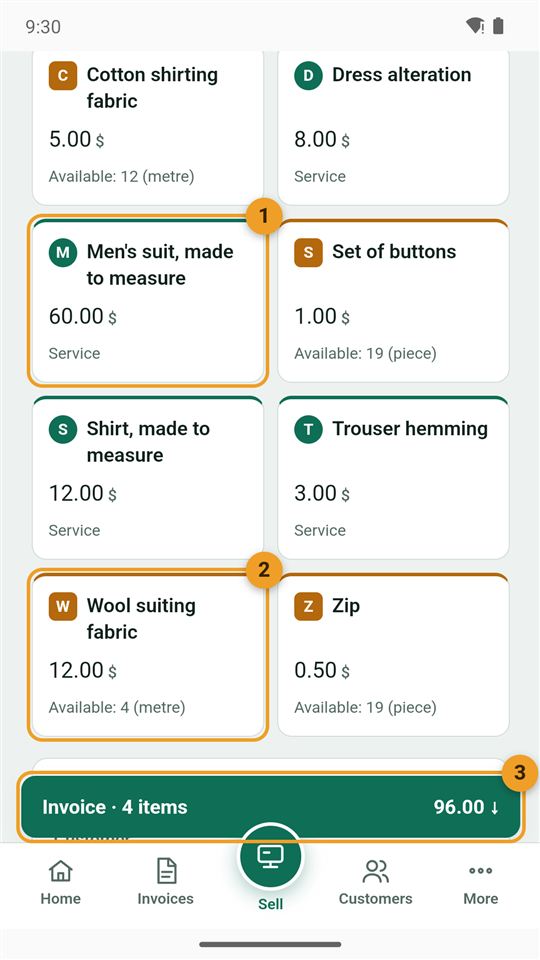
- Men's suit, made to measure $60 (labour).
- Wool suiting: tapped 3 times for 3 metres at $12, with the fabric left under it.
- The invoice bar: 4 items, $96.
His daily work
A deposit now, the rest on collection
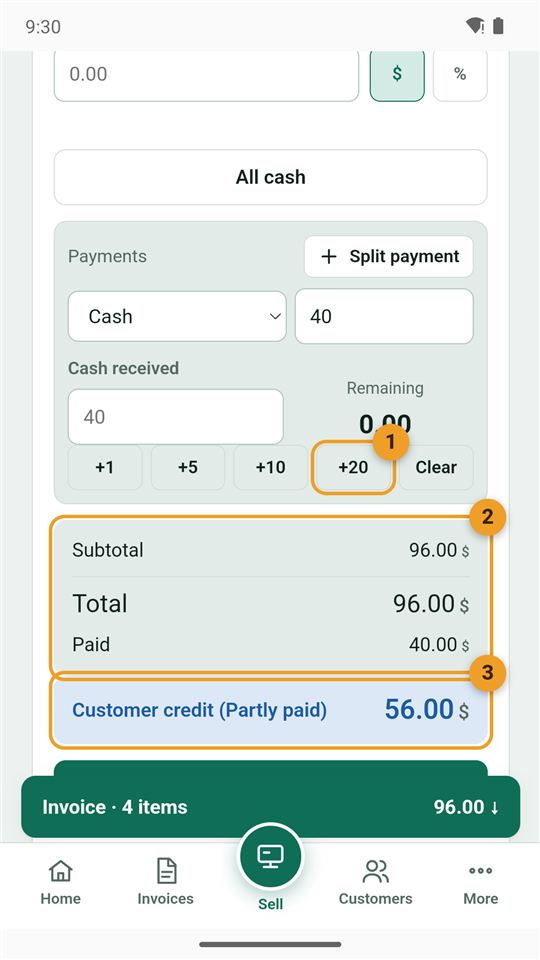
He chose "Khaled Al-Masri" as the customer on the same suit invoice:
- +20 twice: a $40 deposit.
- Total $96, paid $40.
- Customer credit $56.
A week later Khaled collected the suit and paid $56 with a receipt, so his account is settled.
A school order on credit
"Al-Nour School" ordered 8 shirts for its uniform: 8 shirts at $12 and 16 metres of cotton at $5, $176 in all, entirely on credit. It later paid $100 with a receipt, leaving $76. He sends it the account statement as a PDF on WhatsApp from its page under Customers.
In between come small jobs recorded in a tap: hemming trousers for $3, altering a dress for $8 with a zip.
A tour of the sections after two weeks
Home
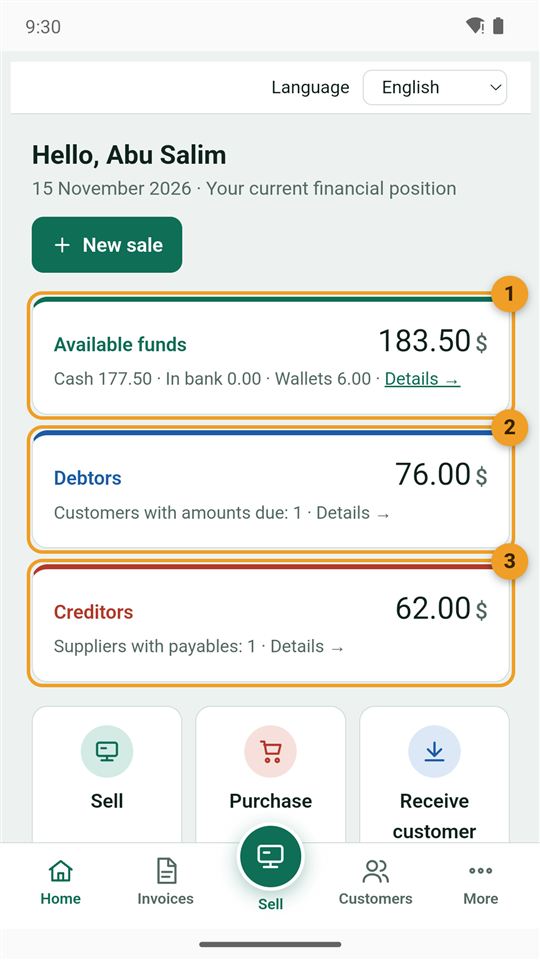
- Available funds $183.50: $177.50 cash and $6 in the wallet.
- Debtors $76: what the school still owes.
- Creditors $62: what he still owes the fabric shop.
Invoices
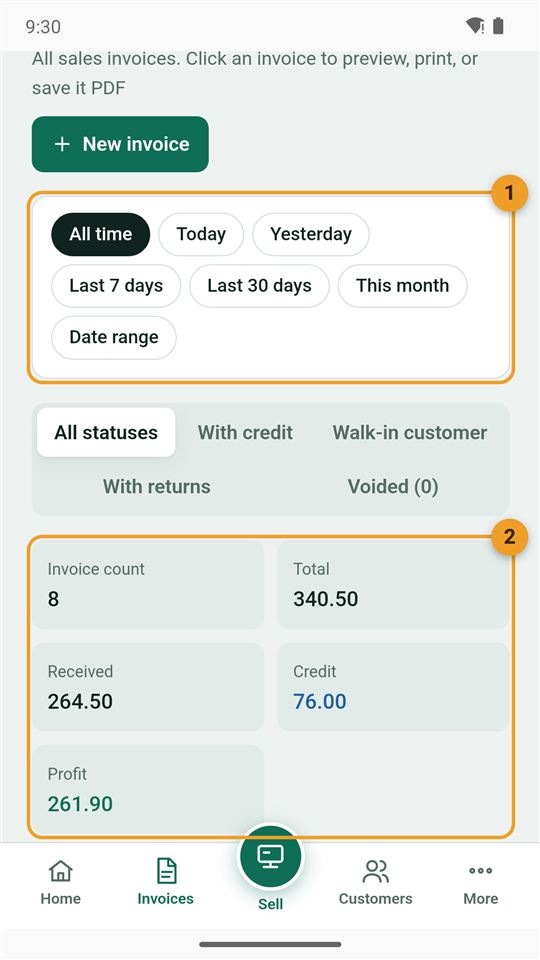
- The period.
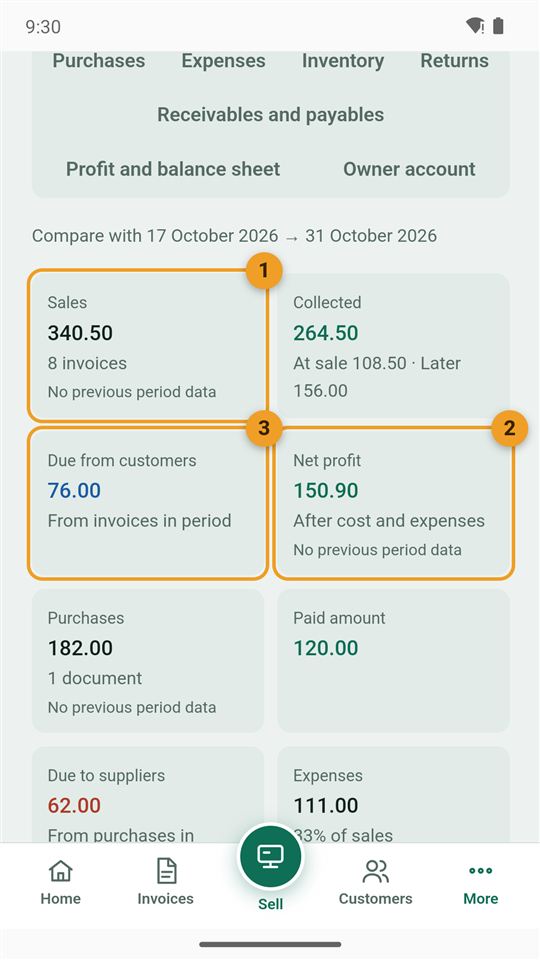
- The summary: 8 invoices for $340.50, $264.50 received and $76 on credit.
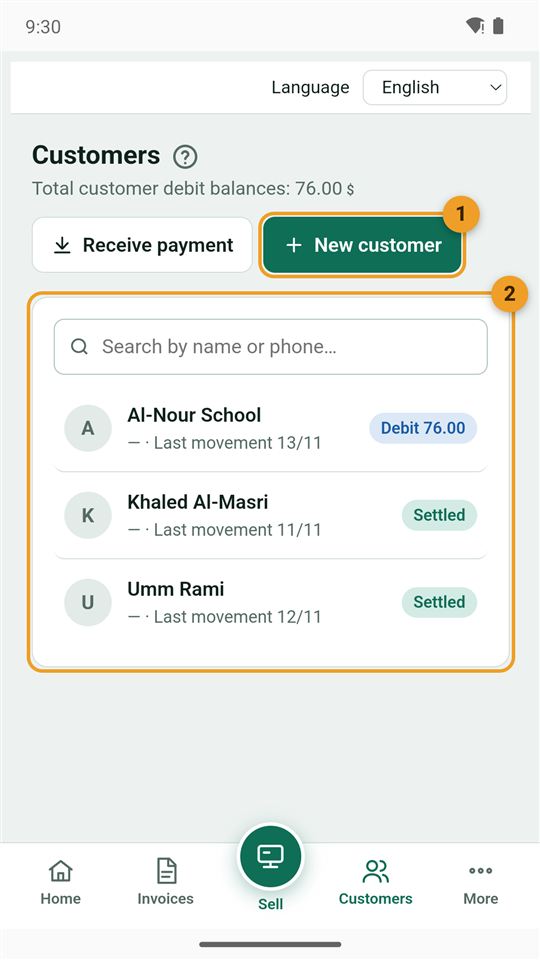
Customers
- New customer.
- The list: Al-Nour School owes $76; Umm Rami and Khaled are settled.
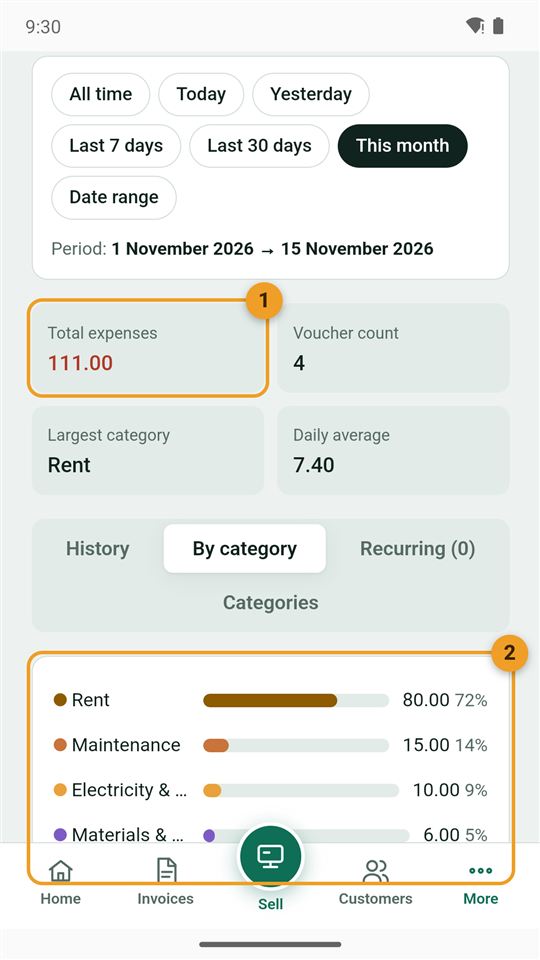
Expenses
- Total expenses $111.
- By category: rent $80, sewing machine service $15, electricity $10, thread and needles $6.
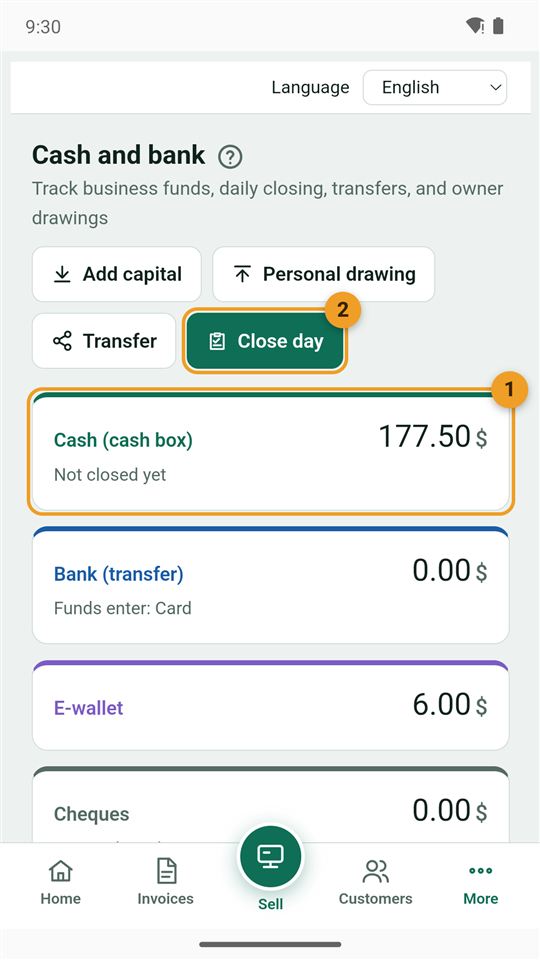
Cash
- Cash (cash box) $177.50.
- Close day at the end of the day.
Reports
- Sales $340.50 in 8 invoices.
- Net profit $150.90 after the cost of the fabric sold and expenses.
- Due from customers $76.
The profit does not count the fabric still on the shelf: it is stock not sold yet. Read How do you know your real profit?