Home › Guide › Example: taxi driver
🚕 Example: Abu Khalil, taxi driver
Abu Khalil works with his own car: city rides, airport runs, and he drives a shipping company's staff every week, paid later. He sells no goods, so his "supplier" is the garage that repairs his car on credit. Here he sets up his book with the eight steps of Step by step, then we follow two weeks of his work. All names and figures are made up.
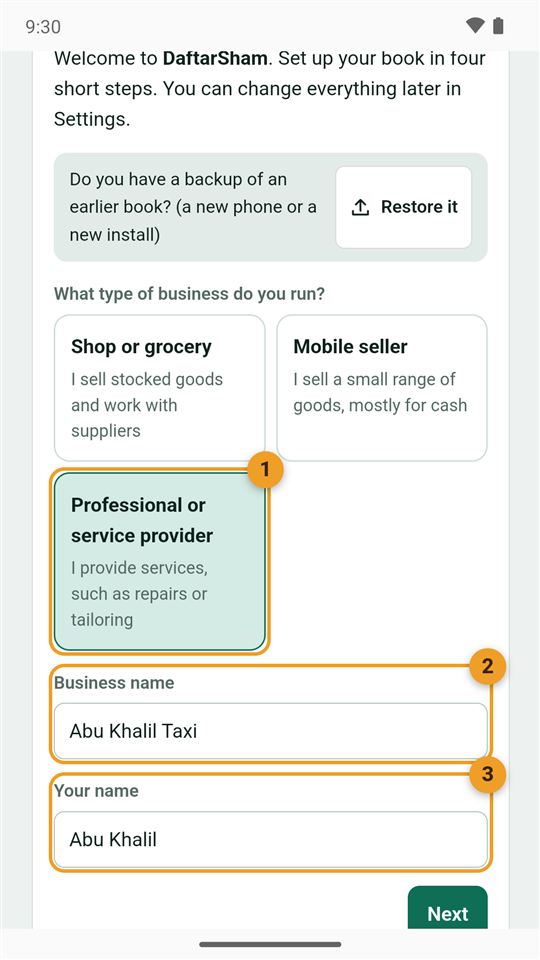
1. First setup
- "Professional or service provider": every ride is a service.
- Business name: "Abu Khalil Taxi".
- His name: "Abu Khalil".
Then the US dollar, $80 in the cash box, and the "Simple" mode.
2. Business details
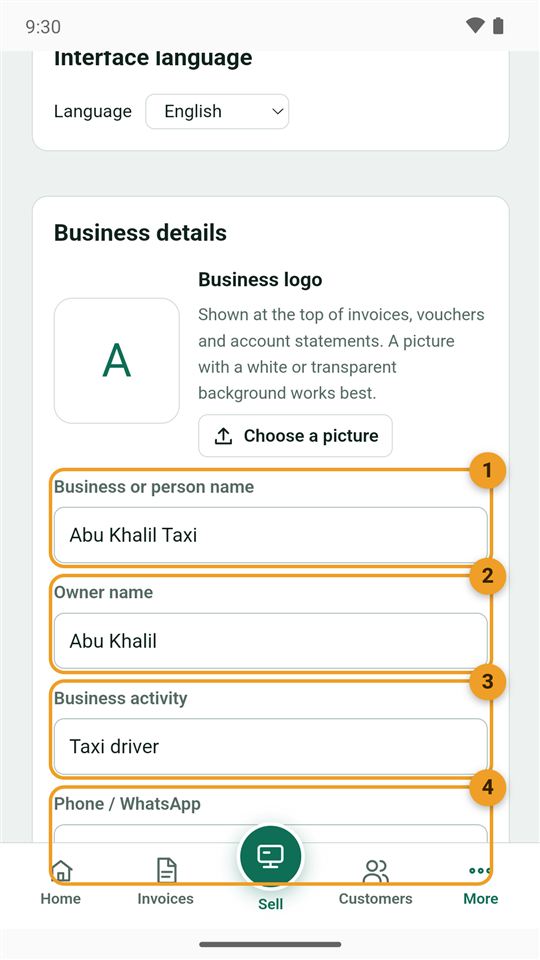
- The name.
- The owner.
- The activity: "Taxi driver".
- The phone / WhatsApp, so customers can call him.
3. Currency
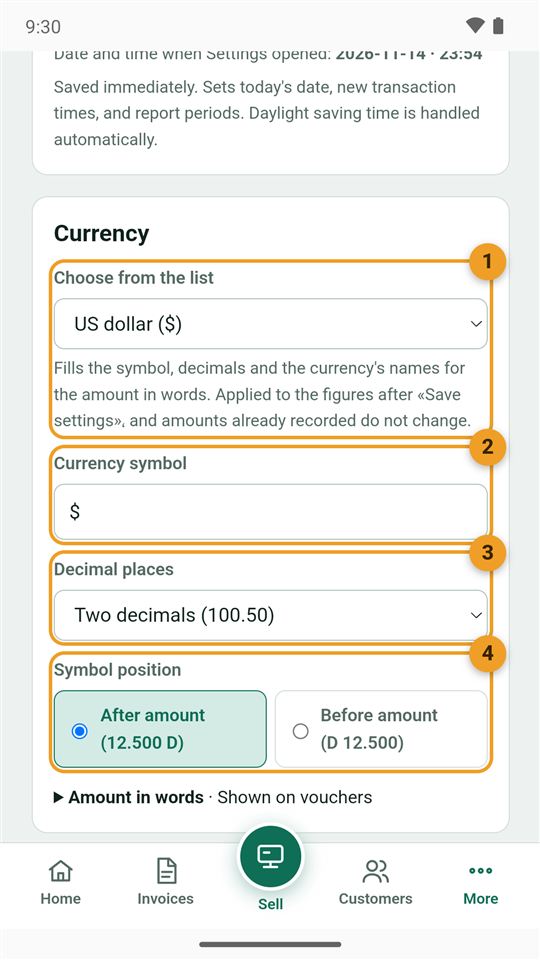
- The US dollar from the list.
- The symbol $.
- Two decimals.
- The symbol after the amount.
4. The supplier: the garage
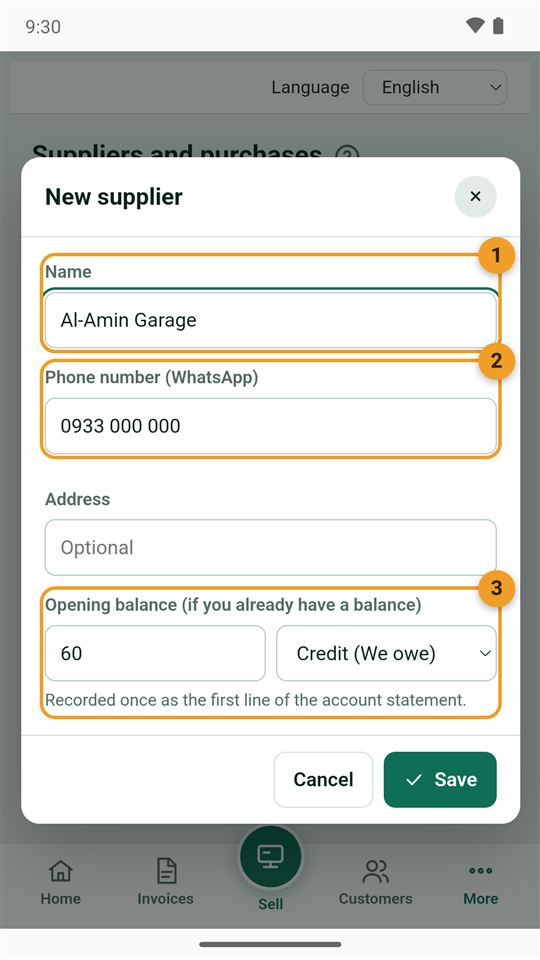
He had the car's brakes fixed at "Al-Amin Garage" for $60 and has not paid yet. From "New" → "Supplier":
- Name: "Al-Amin Garage".
- The phone.
- Opening balance: $60 "Credit" (Abu Khalil owes it).
5. Categories
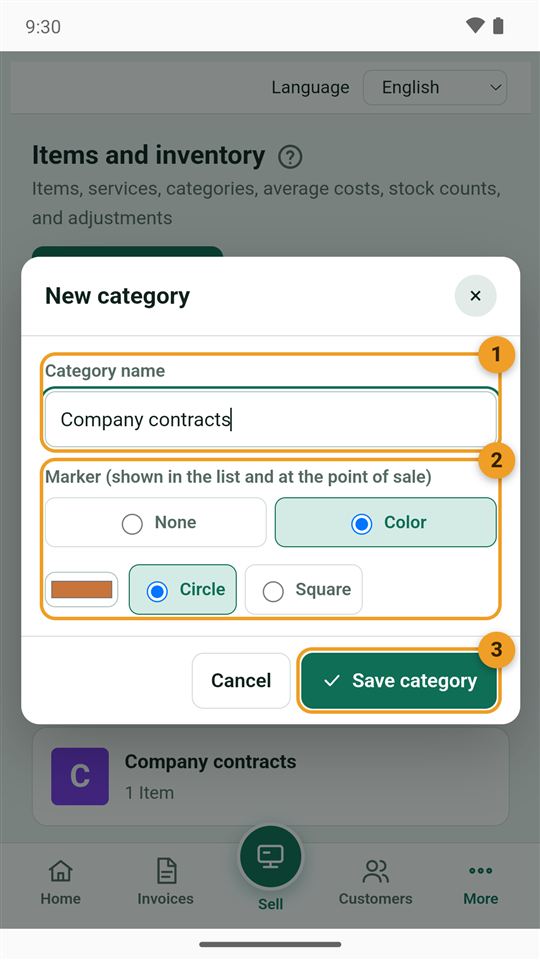
"Rides" for passing customers and "Company contracts" for weekly transport:
- The category name.
- Its colour and shape.
- Save category.
6. Rides as priced services
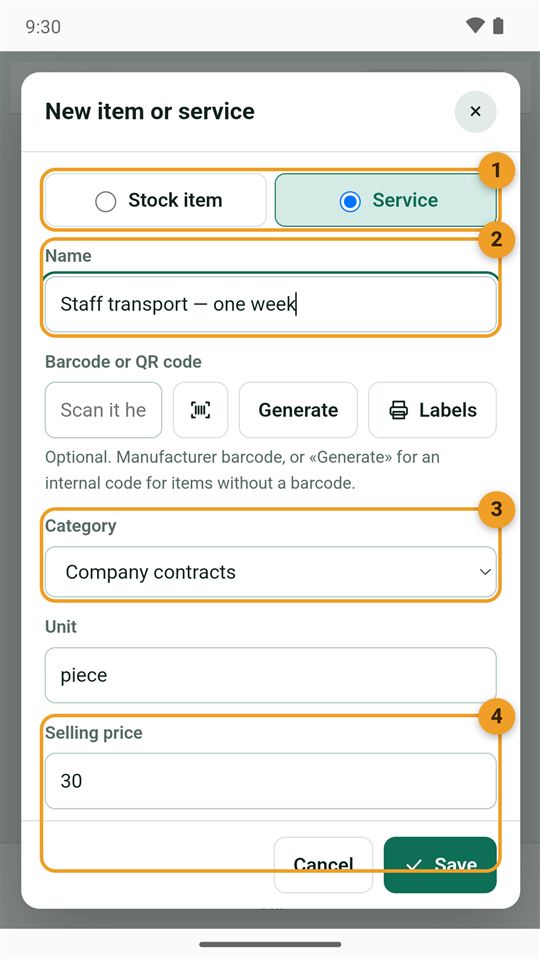
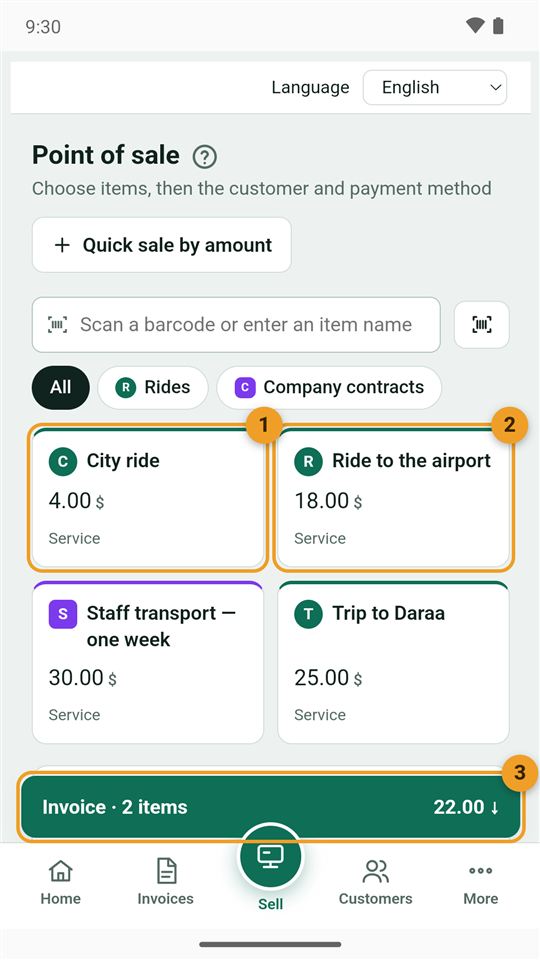
City ride $4, ride to the airport $18, trip to Daraa $25, weekly staff transport $30:
- "Service": rides have no stock.
- Name: Staff transport — one week.
- Category: Company contracts.
- Price $30.
7. Paying the garage
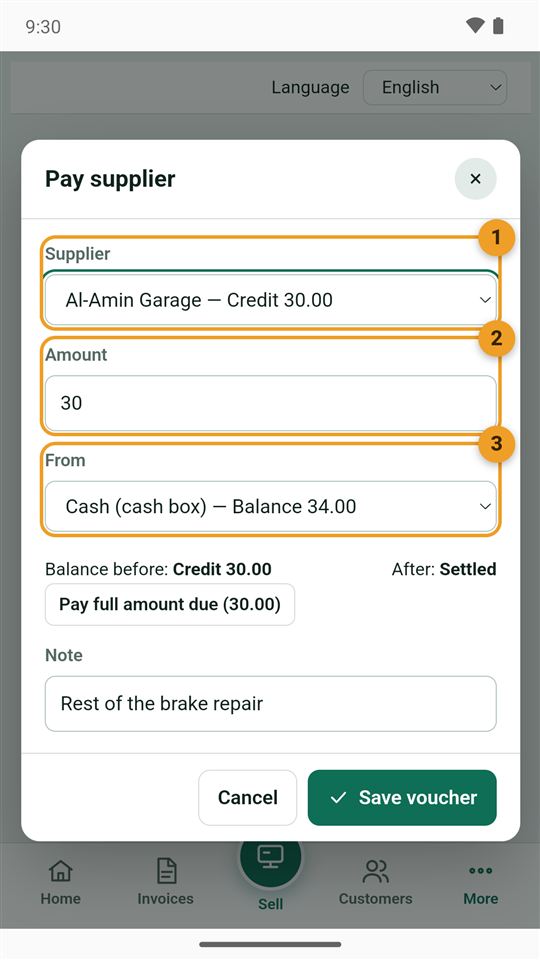
He has no goods, so instead of a purchase invoice he uses "Pay supplier". He paid the garage $30 a week ago, and when he pays the rest he records it like this:
- The supplier: the garage, still owed $30.
- The amount: $30.
- From: the cash box.
Below it he sees the balance after paying: "Settled".
8. The first ride
- City ride $4.
- Ride to the airport $18.
- The invoice bar: $22 for two rides. Usually each ride is its own invoice.
His daily work
Household money is not a business expense
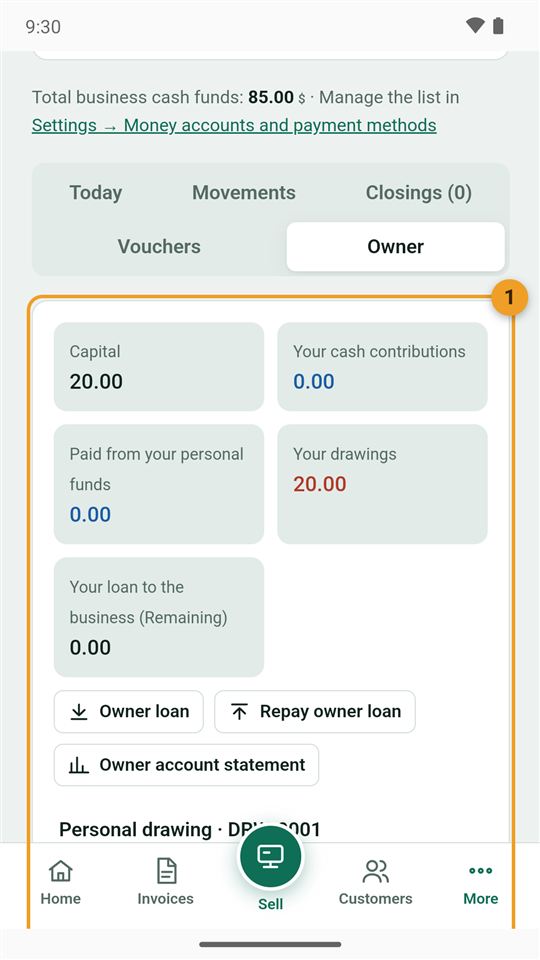
He took $20 for household money and recorded it as a "Personal drawing", not an expense, so the car's profit is not wrongly reduced:
- Personal drawing from the cash page.
- The Owner tab: his drawings and the capital he started with.
A tour of the sections after two weeks
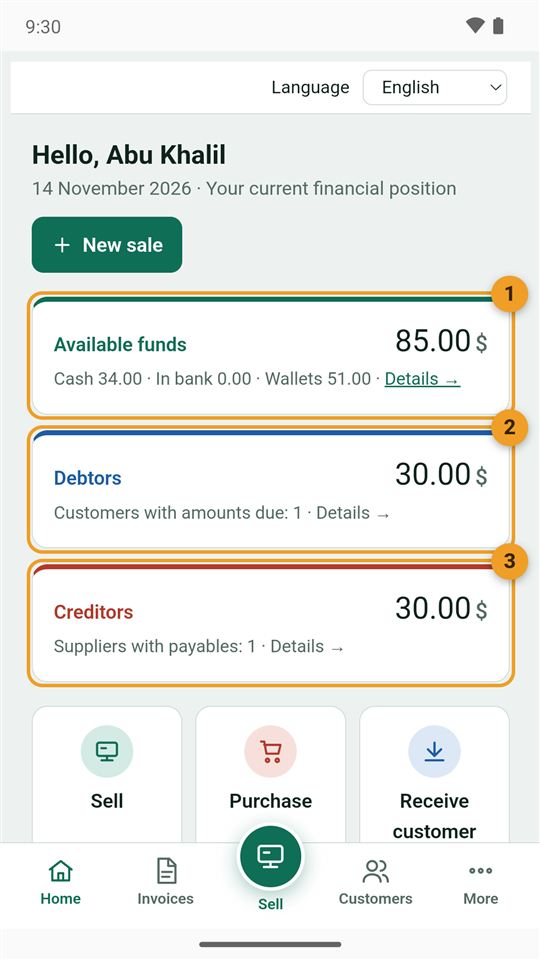
Home
- Available funds $85: $34 cash and $51 in the wallet.
- Debtors $30: one week the company has not paid yet.
- Creditors $30: what is left for the garage until he pays it.
Invoices
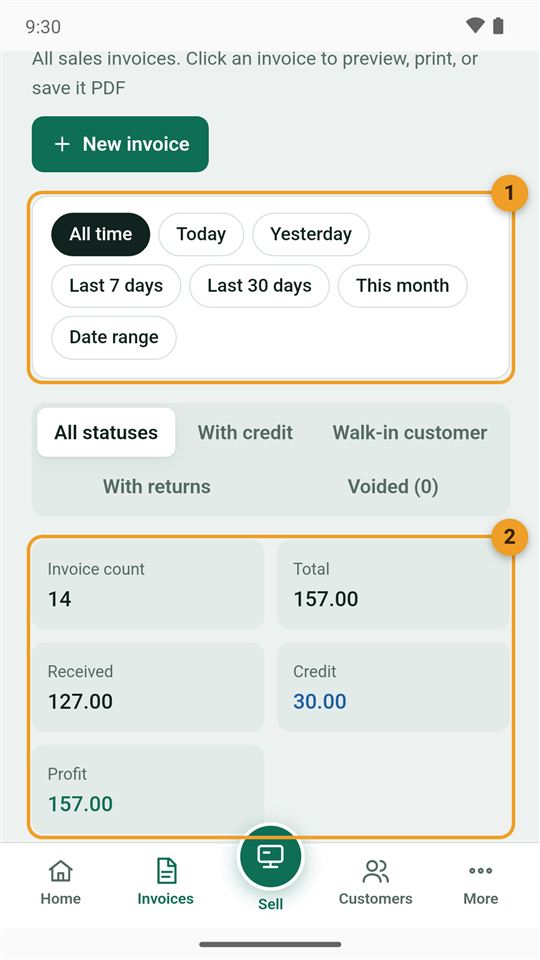
- The period.
- The summary: 14 invoices for $157, with $30 on credit with the company.
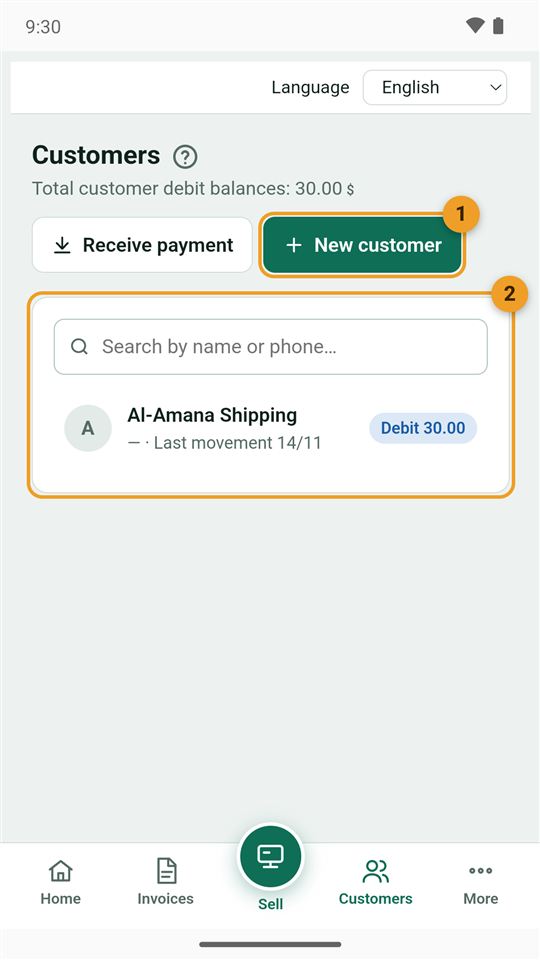
Customers
- New customer for companies and regulars.
- Al-Amana Shipping: owes $30, two weeks worth $60 of which it paid one by wallet.
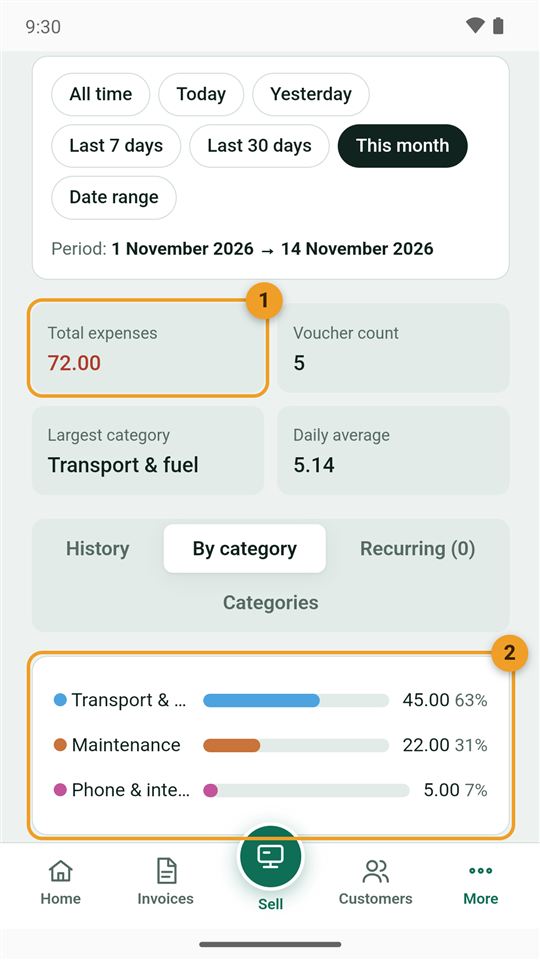
Car expenses
- Total expenses $72.
- By category: fuel $45, maintenance $22, data plan $5.
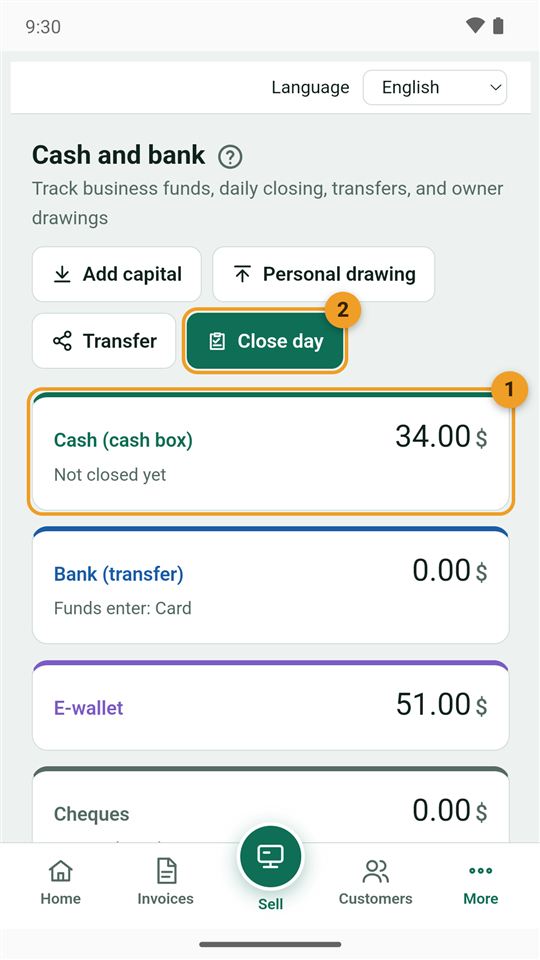
Cash
- Cash (cash box) $34.
- Close day at the end of the day.
The car's real profit
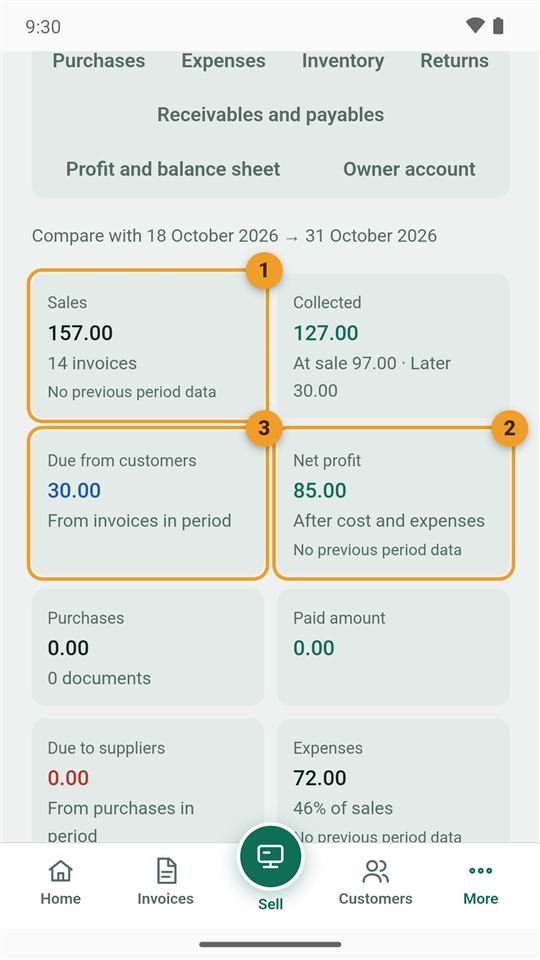
- Sales $157 in 14 invoices.
- Net profit $85 after expenses. The household drawing does not reduce it.
- Due from customers $30.