Home › Guide › Example: grocery
🛒 Example: Al-Yasmin grocery
Abu Samer runs a small neighbourhood grocery: rice, sugar, oil, tea, milk and bread, juice by the bottle, bananas by the kilo, and Turkish coffee he grinds and sells by weight or by money, plus home delivery. Some neighbours buy on credit and pay at the end of the month. Here he sets up his book with the eight steps of Step by step, then we follow his month. All names and figures are made up.
1. First setup
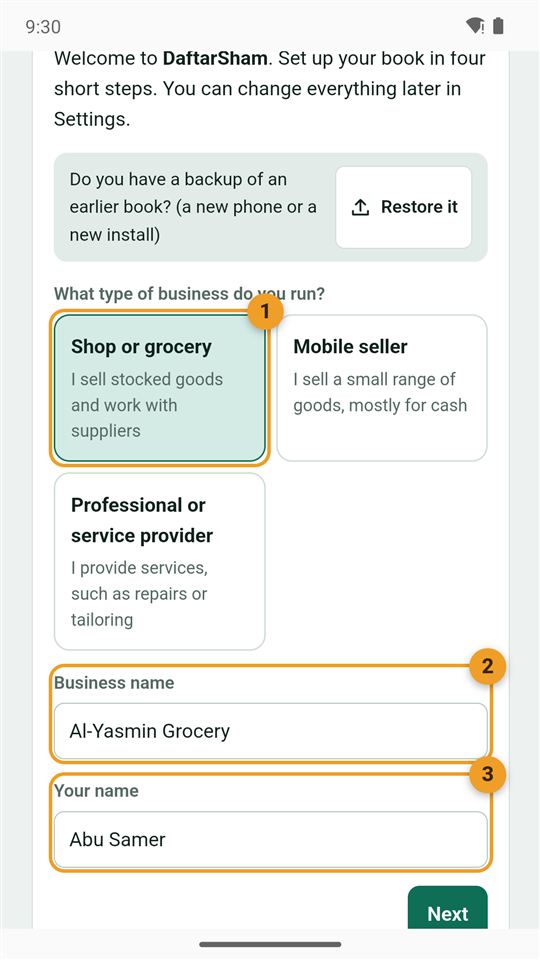
- "Shop or grocery": he sells goods from stock, so the app suggests "Full" mode with purchases and stock counts.
- Business name: "Al-Yasmin Grocery".
- His name: "Abu Samer".
2. Shop details
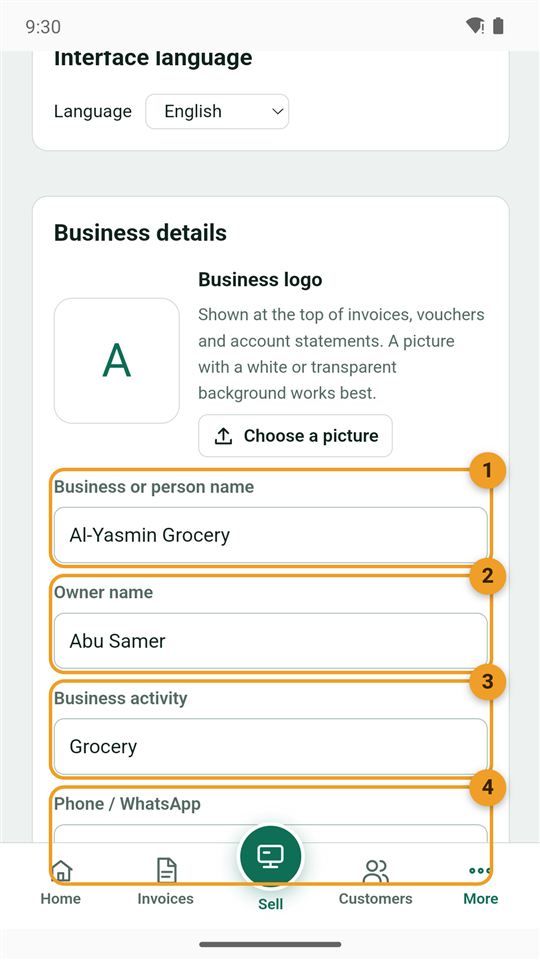
- The name.
- The owner.
- The activity: "Grocery".
- The phone / WhatsApp for delivery orders.
3. Currency
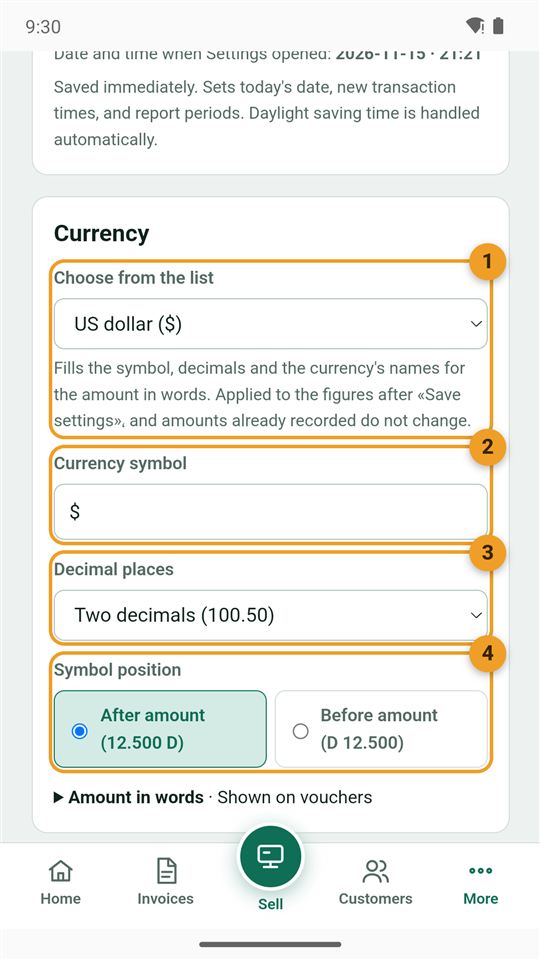
- The US dollar from the list.
- The symbol $.
- Two decimals, since bread costs $0.75.
- The symbol after the amount.
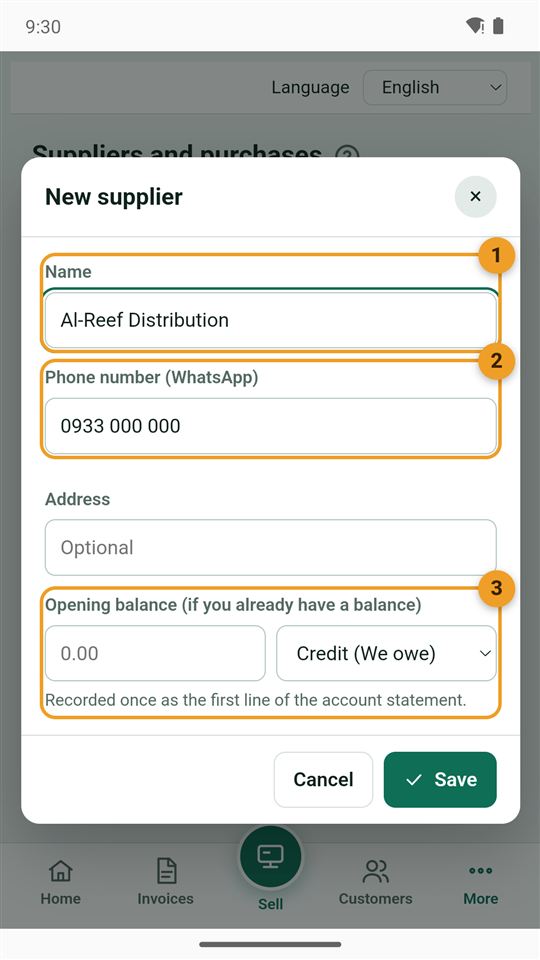
4. The supplier
- Name: "Al-Reef Distribution".
- The phone for orders.
- Opening balance: none.
5. Categories
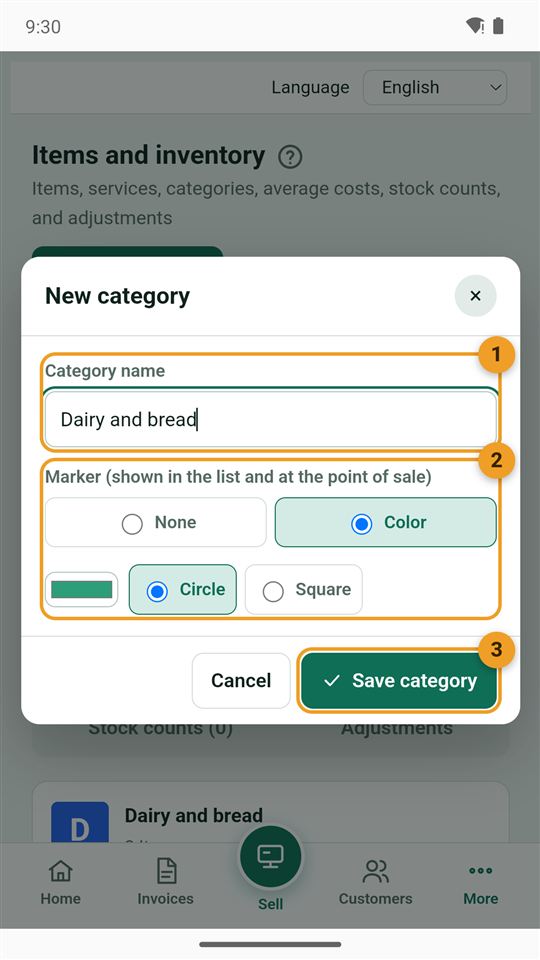
"Food staples" for rice, sugar, oil, tea, juice and coffee, "Dairy and bread" for milk and bread, and "Fruit and veg" for bananas:
- The category name.
- Its colour and shape.
- Save category.
6. Items
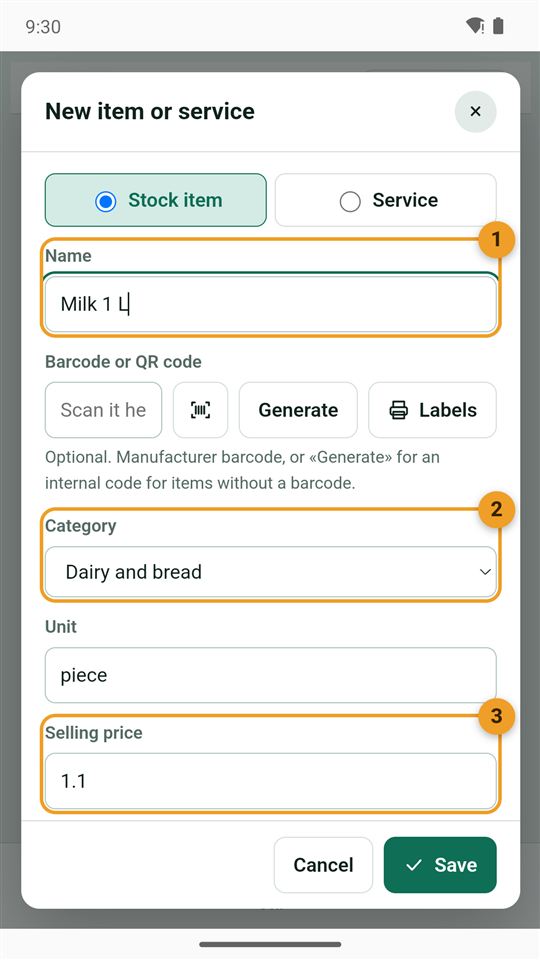
Each item with its price, cost, quantity, barcode and minimum. The unit decides how it is sold: "bottle" for juice, sold by count, and "kg" for bananas ($1.20) and Turkish coffee ($20), so the app asks for the weight at the sale. "Home delivery" is a $1 service:
- Name: Milk 1 L.
- Category: Dairy and bread.
- Selling price $1.10, with the cost $0.80 and a minimum of 5 cartons below it.
7. Stock from a purchase invoice
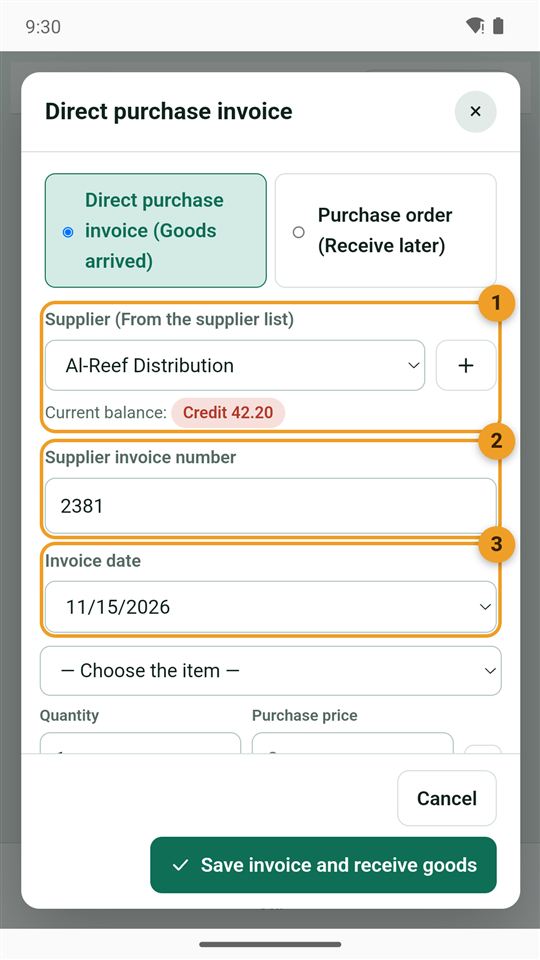
- The supplier: Al-Reef.
- Its invoice number: 2381.
- The date.
10 bags of rice and 12 bottles of oil for $92.20; he paid $50, so he owes the company $42.20.
8. The first sale
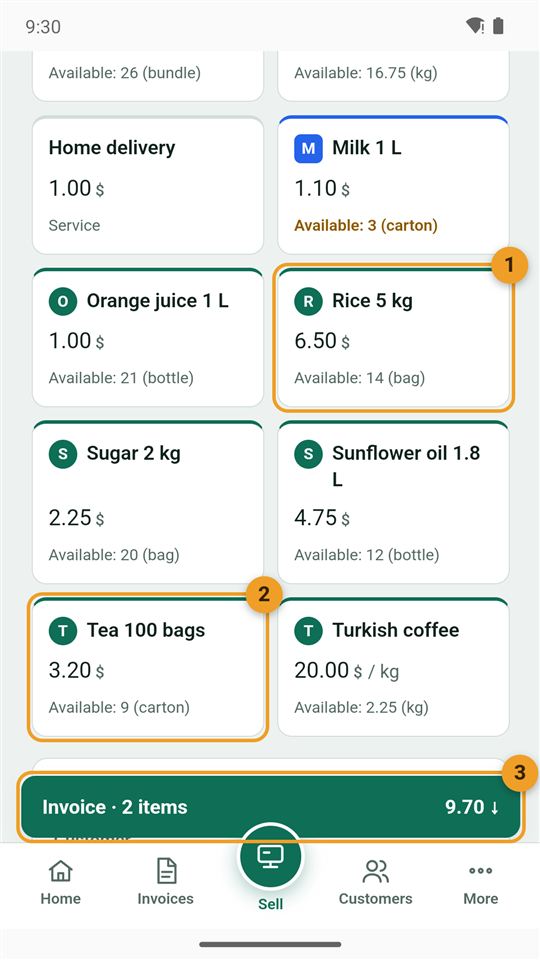
- Rice 5 kg $6.50, with what is left under it.
- Tea 100 bags $3.20.
- The invoice bar: $9.70. Or he scans each product's barcode with the camera.
Selling, stock and debts
"Five dollars' worth of coffee"
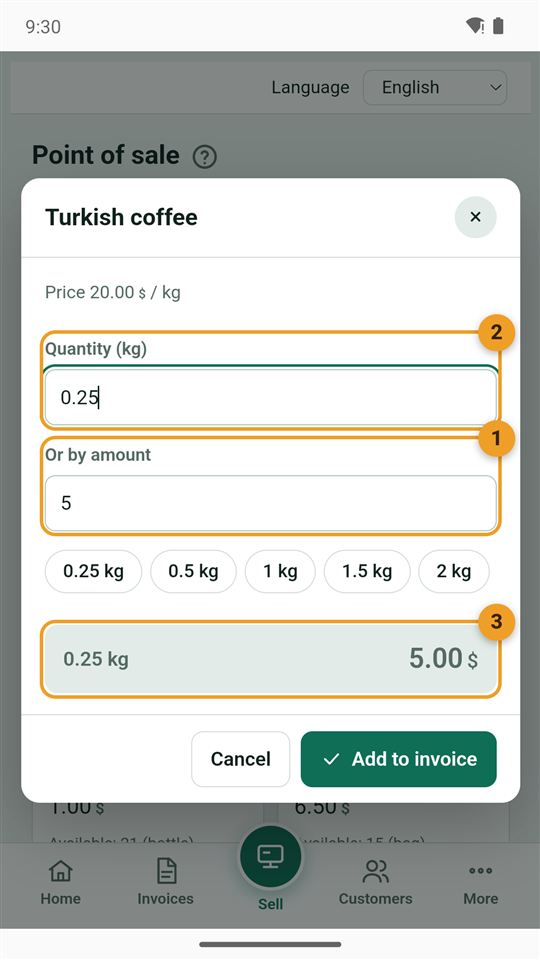
Turkish coffee has the unit kg, so tapping it opens the quantity window. The customer asks by money:
- Or by amount: $5.
- The quantity follows on its own: 0.25 kg, that is 250 grams to grind and weigh.
- The sum: 0.25 kg = $5.00.
If the customer asks by weight, he types it in "Quantity" directly, like 0.5 for half a kilo.
One invoice, every way of selling
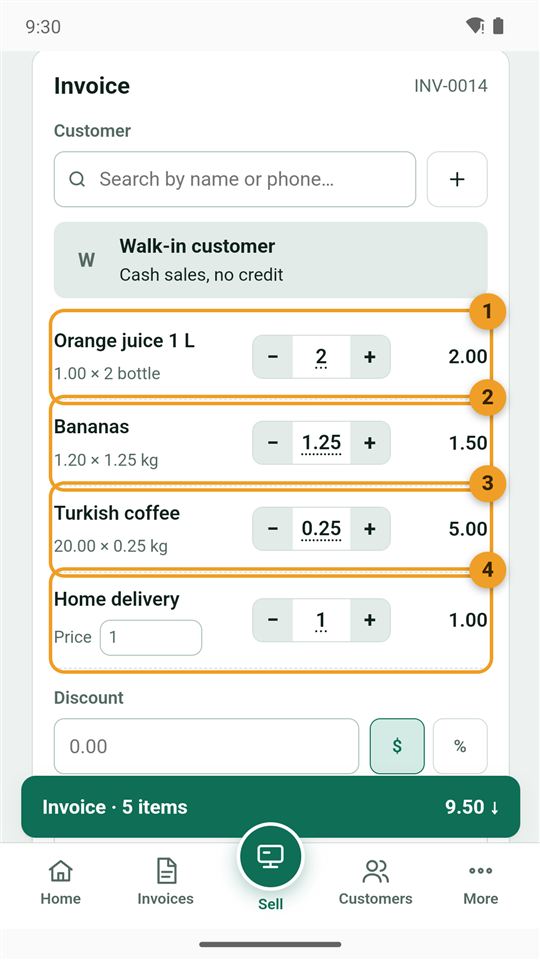
A home-delivery order with every kind of sale together:
- Orange juice: two bottles by count, two taps on the card = $2.00.
- Bananas: 1.25 kg by weight = $1.50.
- Turkish coffee: $5 worth, by money = 0.25 kg.
- Home delivery: a service with no stock = $1.00.
The total is $9.50. Tap the underlined number on any line to change its quantity.
The supplier's invoice photo
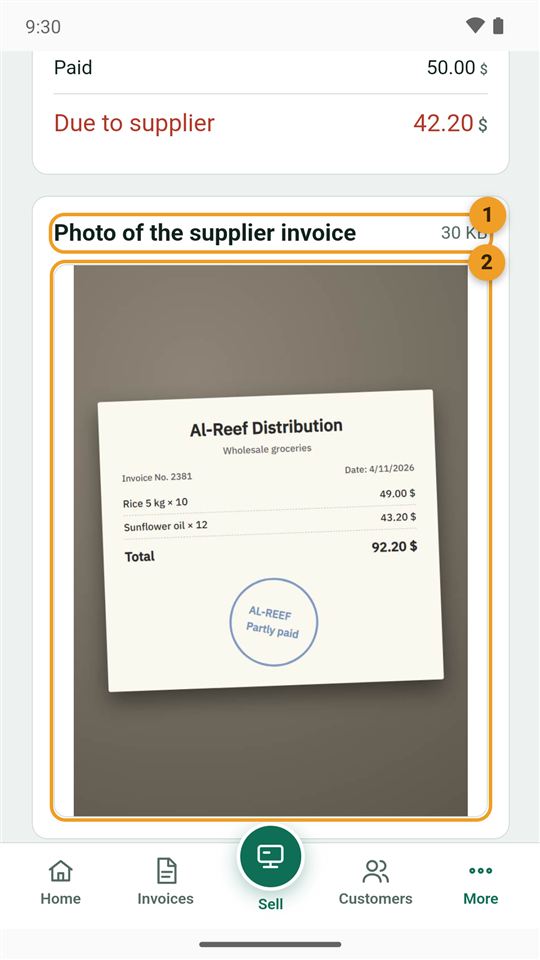
On the purchase invoice he took a photo of the paper invoice:
- The supplier's invoice photo, shrunk to about 30 KB.
- Clear enough to read if there is ever a dispute.
Low-stock alert
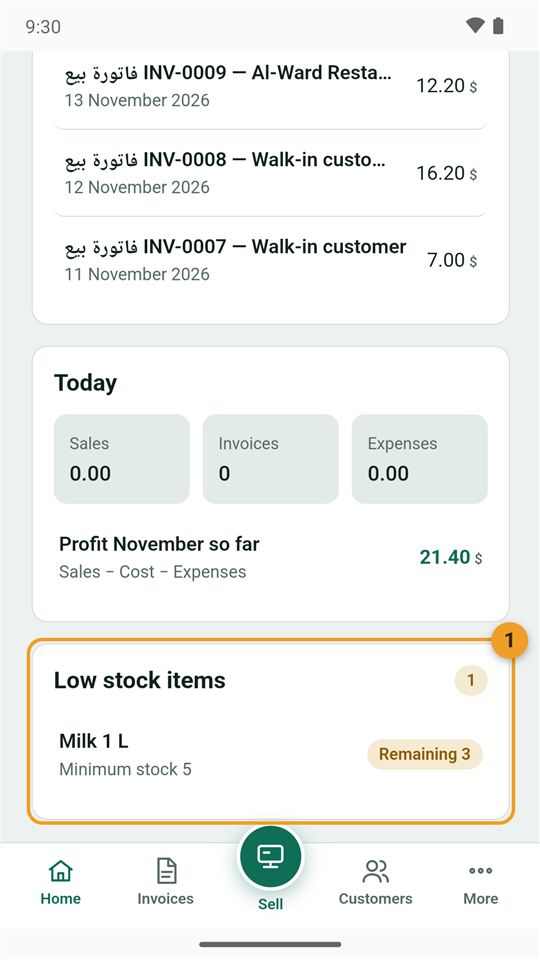
- At the bottom of the home page: only 3 cartons of milk left, below the minimum of 5. Time to order.
Barcodes and stock counts
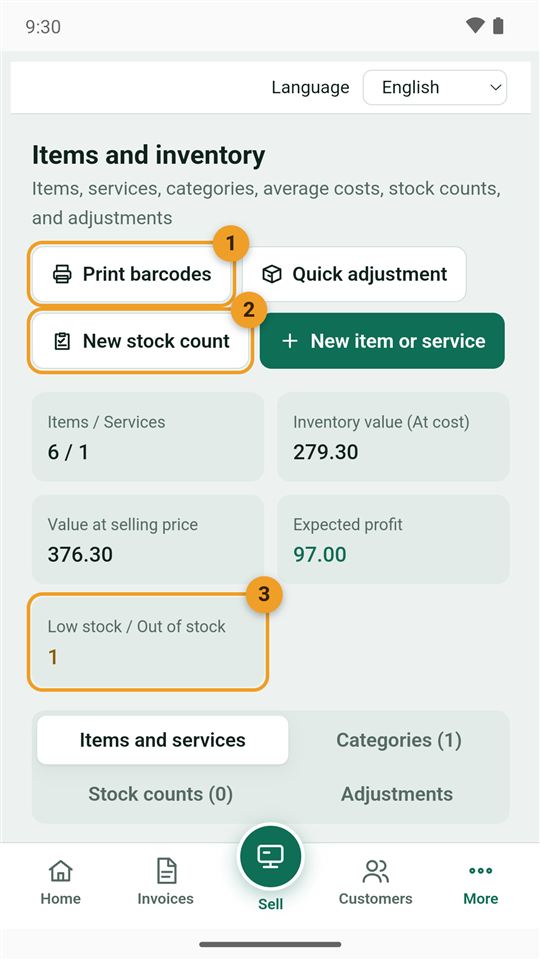
- Print barcodes: labels for items without one, like bread.
- New stock count: he counts the shelves and the app records the difference.
- Low / Out of stock: how many items need ordering.
Who owes whom
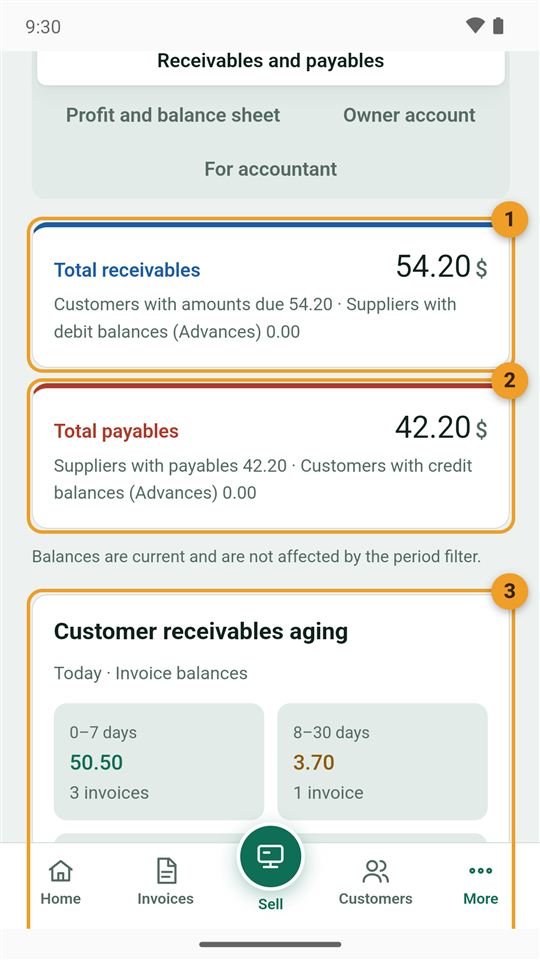
From Reports → Receivables and payables:
- Receivables $54.20 with neighbours and the restaurant.
- Payables $42.20 to the supplier.
- Debt ages: so he chases the oldest first.
A tour of the sections
Home
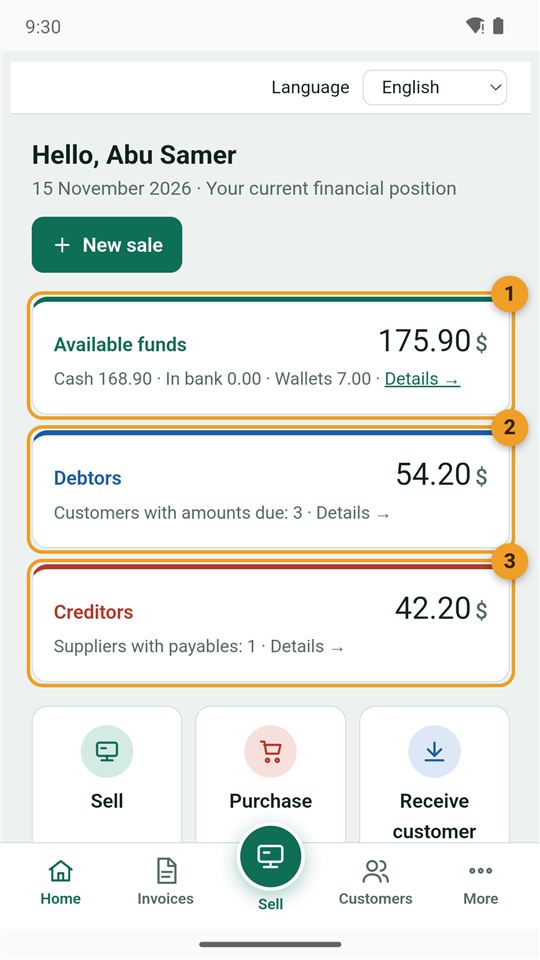
- Available funds $175.90: $168.90 cash and $7 in the wallet.
- Debtors $54.20 with 3 customers.
- Creditors $42.20 to Al-Reef.
Invoices
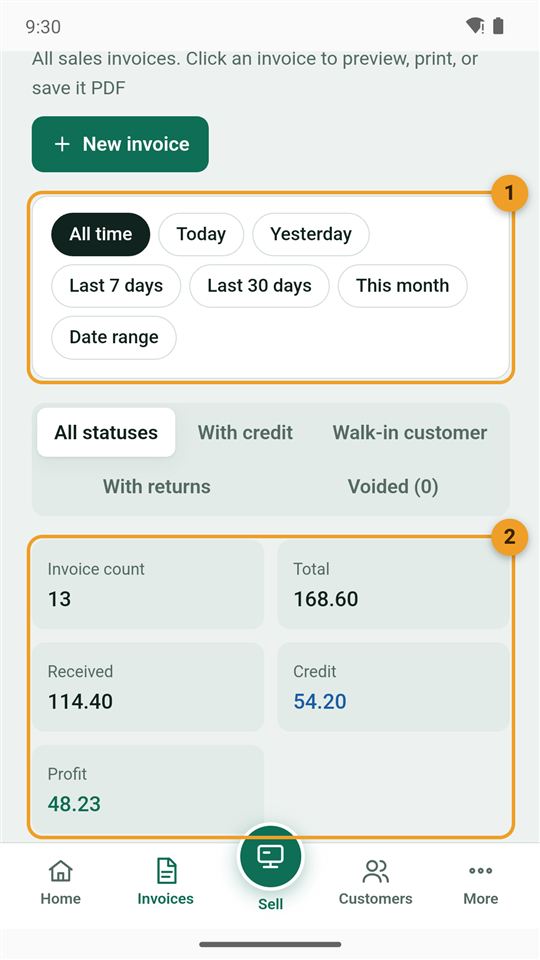
- The period.
- The summary: 13 invoices for $168.60, $114.40 received and $54.20 on credit.
Customers
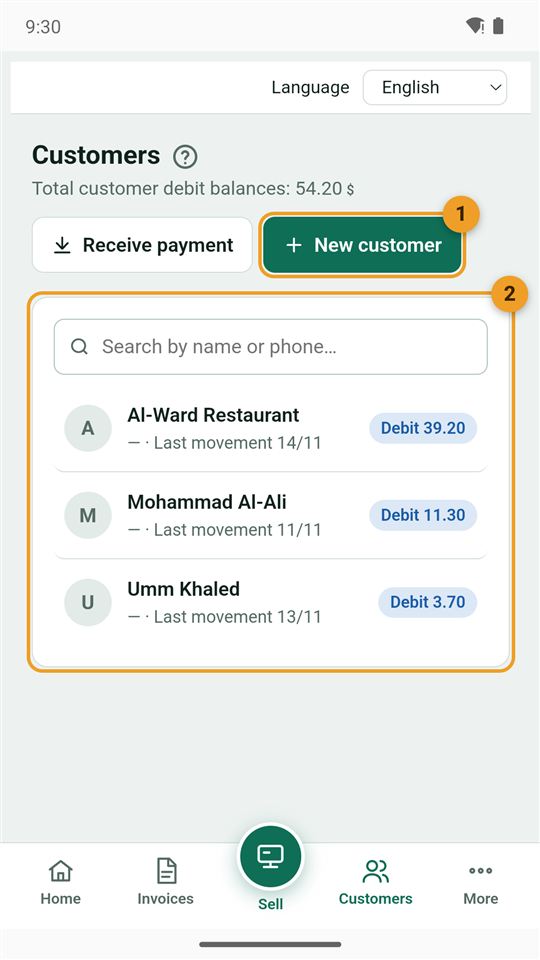
- New customer for a neighbour who buys on credit.
- The list: Al-Ward Restaurant, Mohammad Al-Ali and Umm Khaled, each with a balance.
Expenses
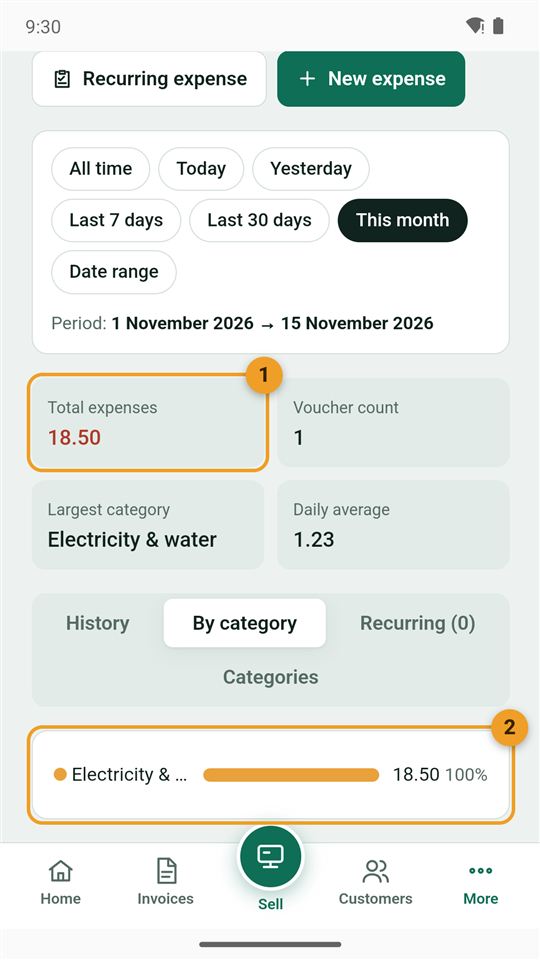
- Total expenses this month $18.50.
- By category: electricity. The rent was paid last month.
Cash
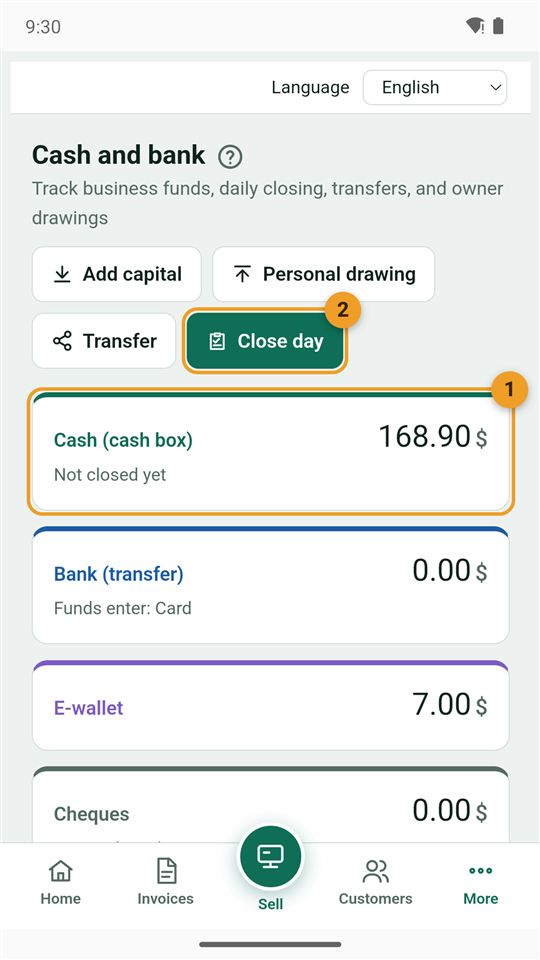
- Cash (cash box) $168.90.
- Close day at the end of the day.
The month's profit
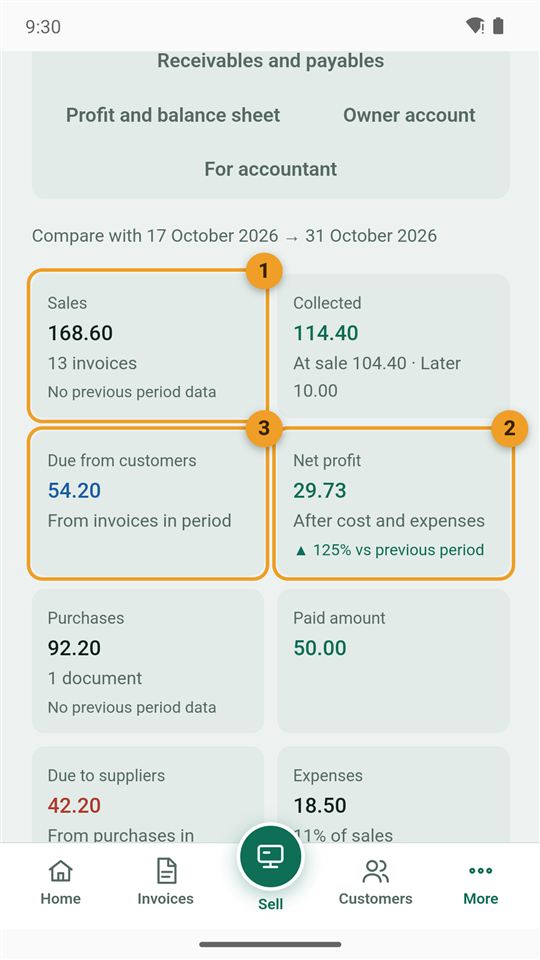
- Sales $168.60 in 13 invoices.
- Net profit $29.73 after the cost of goods at their average purchase price, and electricity.
- Due from customers $54.20.