Home › Guide › Example: street vendor
🧺 Example: Abu Mohammad's cart
Abu Mohammad sells grilled corn, orange juice and water from a cart in the market, and buys his goods from a wholesaler. His sales are fast and mostly cash, and at the end of each day he wants to know: does the cash box add up? Here he sets up his book with the eight steps of Step by step, then we follow his week. All names and figures are made up.
1. First setup
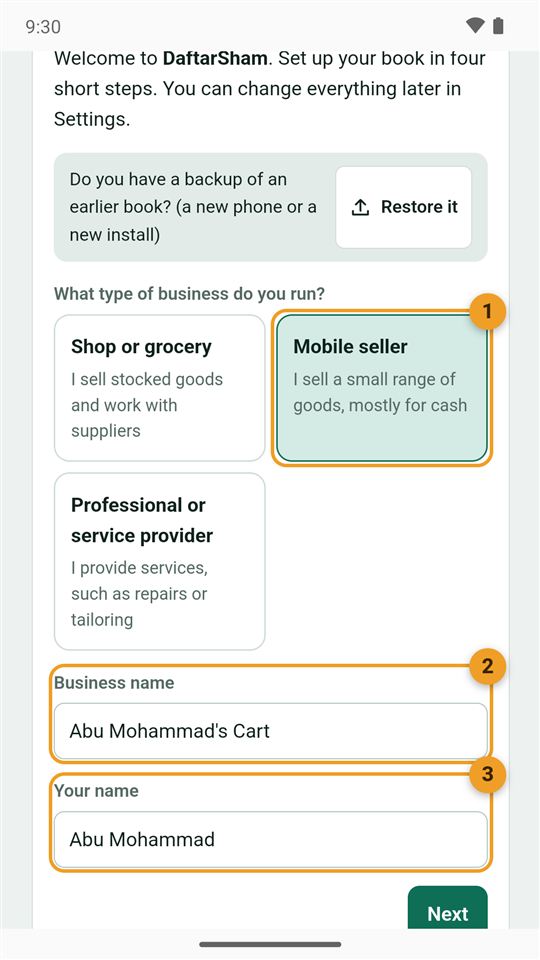
- "Mobile seller": a small range of goods, mostly sold for cash.
- Business name: "Abu Mohammad's Cart".
- His name: "Abu Mohammad".
Then the US dollar, $130 in the cash box, and the "Simple" mode.
2. Business details
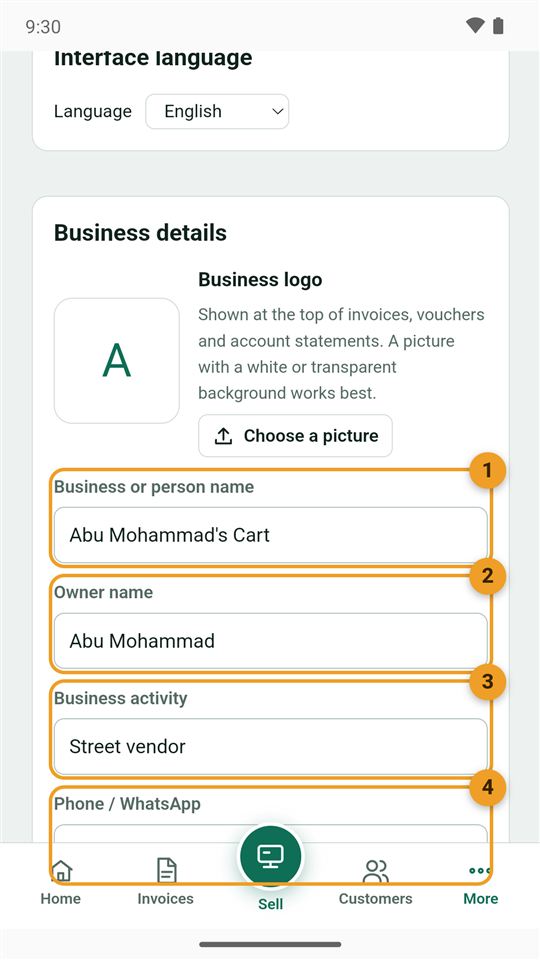
- The name.
- The owner.
- The activity: "Street vendor".
- The phone / WhatsApp for regular customers' orders.
3. Currency
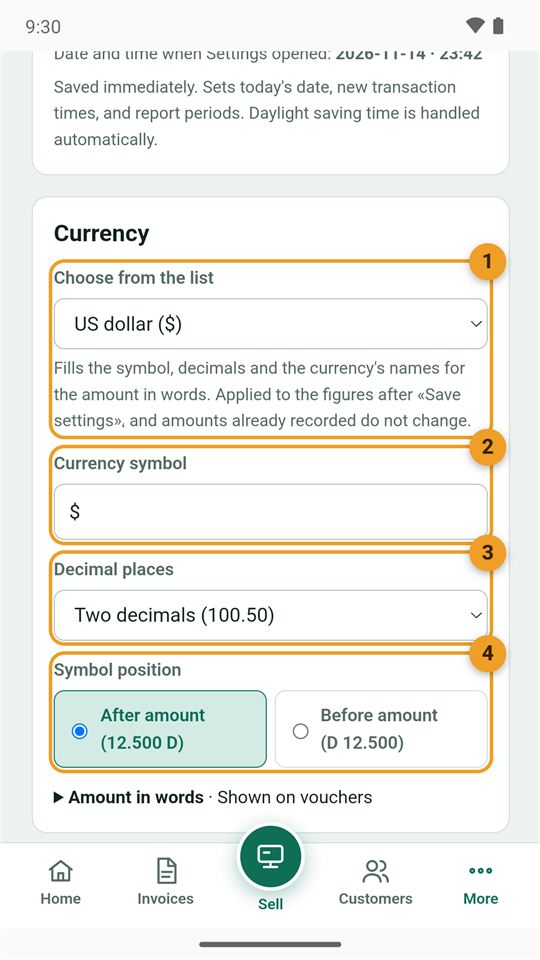
- The US dollar from the list.
- The symbol $.
- Two decimals, since water costs $0.50.
- The symbol after the amount.
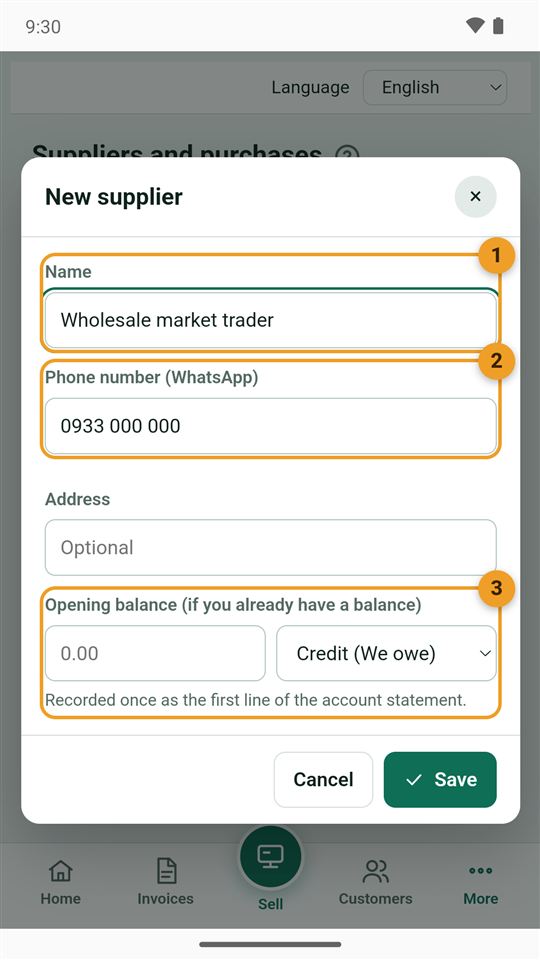
4. The supplier
- Name: "Wholesale market trader".
- The phone.
- Opening balance: none.
5. Categories
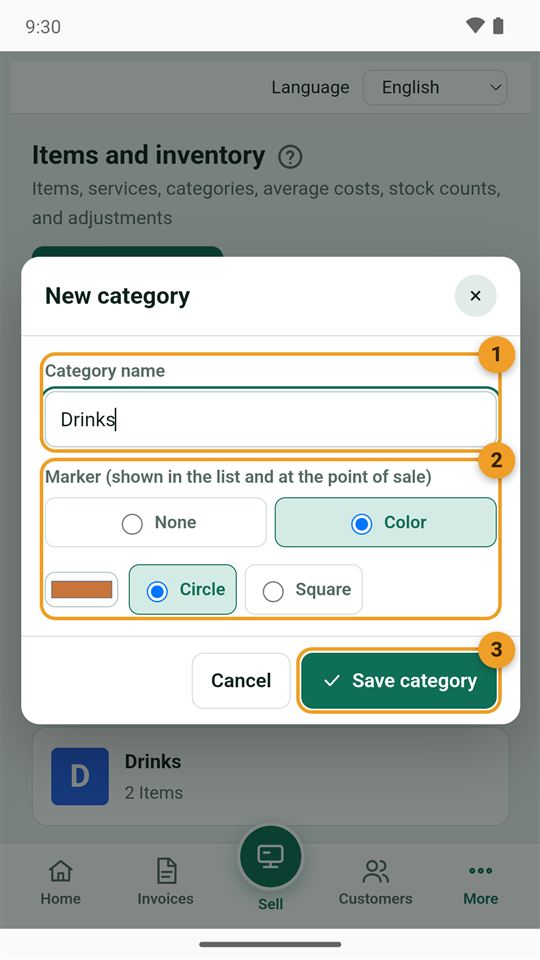
"Food" for the corn, "Drinks" for juice and water:
- The category name.
- Its colour and shape.
- Save category.
6. Items
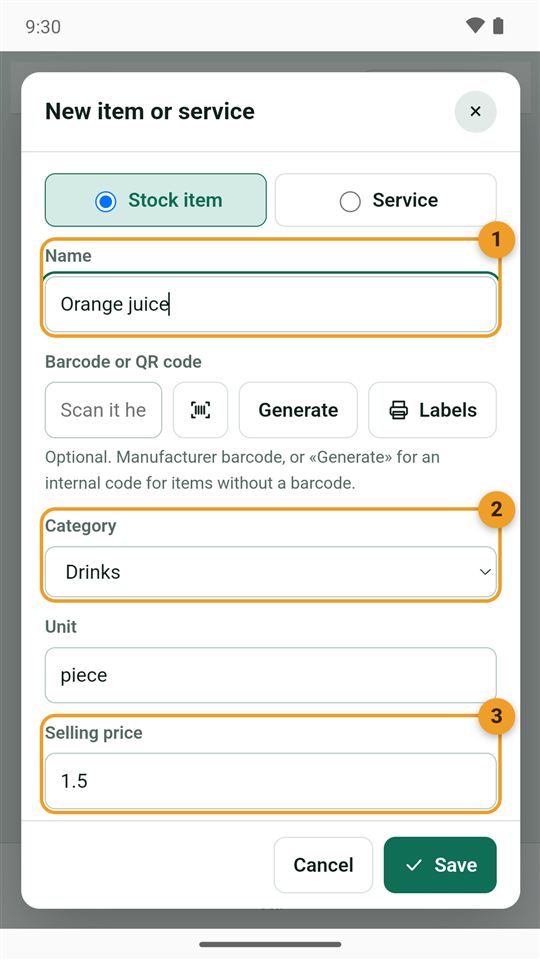
Grilled corn $1, orange juice $1.50, small water $0.50, all stocked:
- Name: Orange juice.
- Category: Drinks.
- Selling price $1.50, cost $0.70.
7. Stock from the wholesale market
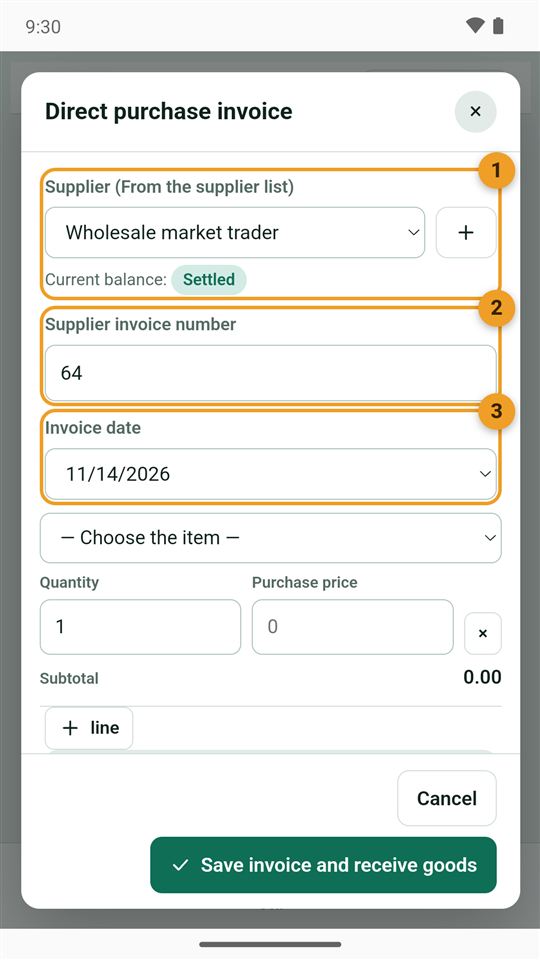
- The supplier: the wholesaler.
- His invoice number: 64.
- The date.
130 corn, 60 juices and 80 waters for $110, paid in cash, leaving $20 change in the box.
8. The first sale
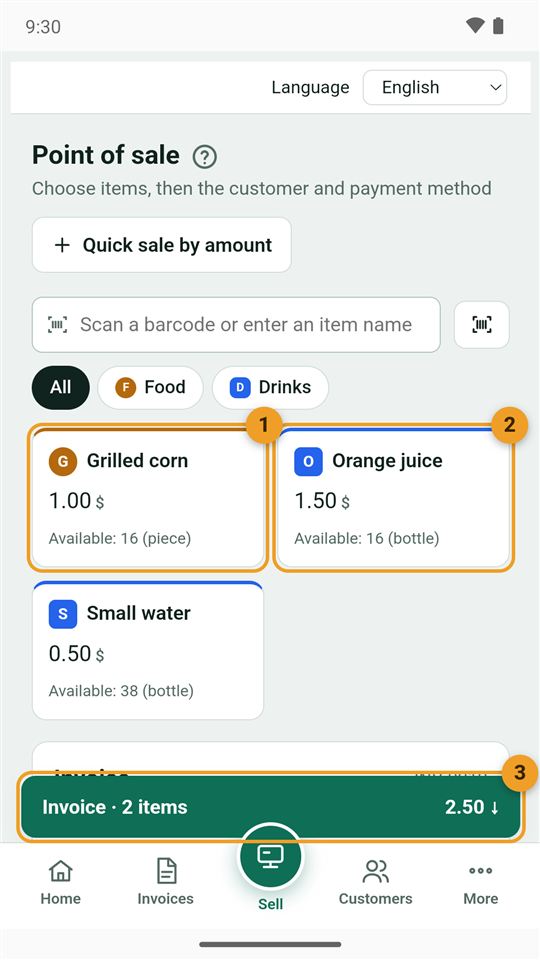
- Grilled corn $1.
- Orange juice $1.50.
- The invoice bar: $2.50. Tap it, then "All cash" and "Save".
His daily work
Closing the day
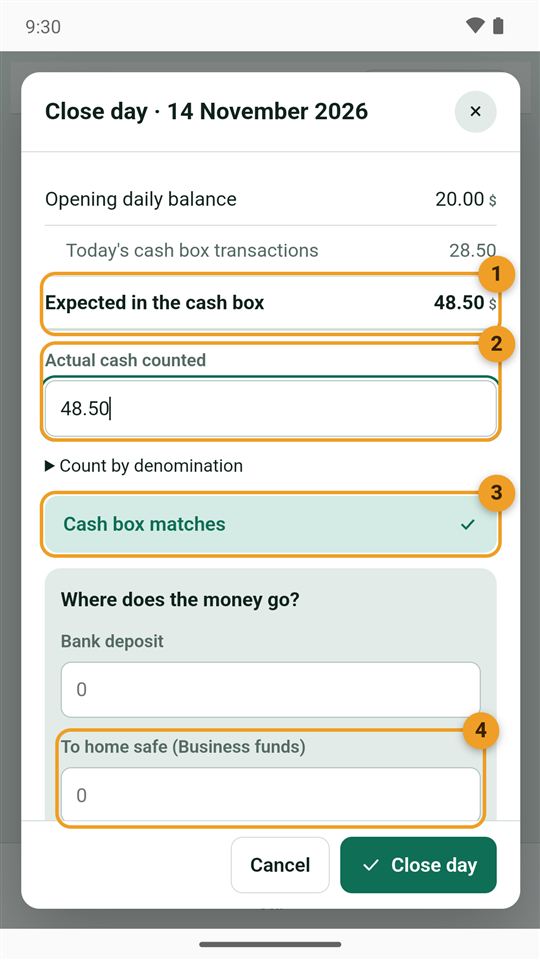
At the end of the day, from Cash → Close day:
- Expected in the cash box: $48.50, the morning balance plus today's cash sales.
- He counted the money and entered the actual cash counted.
- Cash box matches.
- To home safe: what he takes home, leaving change for tomorrow.
The closings log
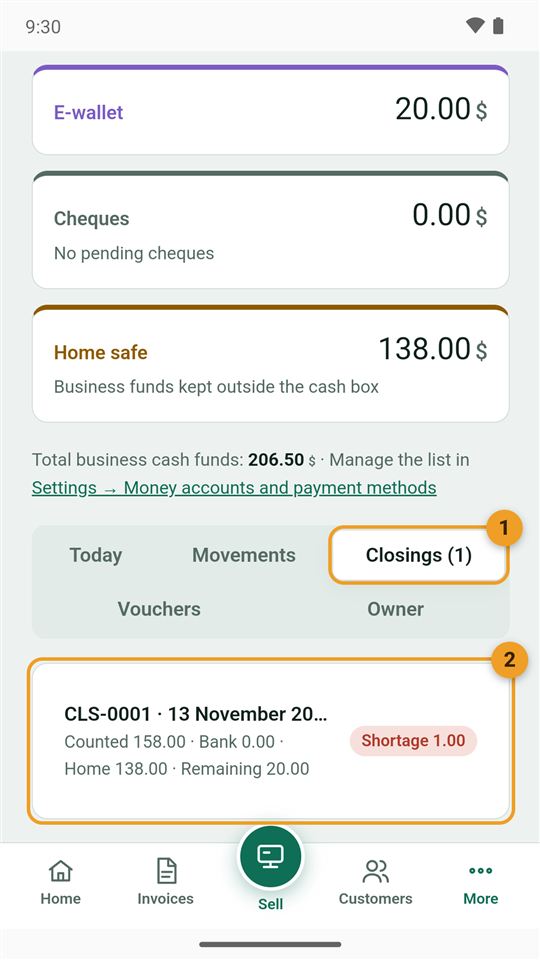
- The Closings tab.
- Yesterday's closing: he counted $158, so it was $1 short (extra change for a customer); he took $138 home and left $20.
Which item earns most?
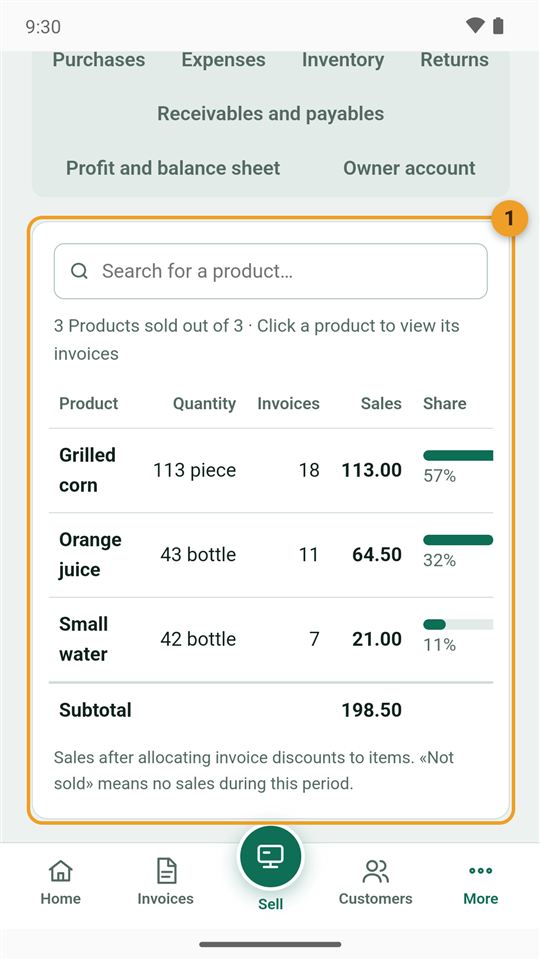
- Sales by product: corn $113 (57%), juice $64.50 (32%), water $21 (11%). So he brings more corn on busy market days.
A tour of the sections after a week
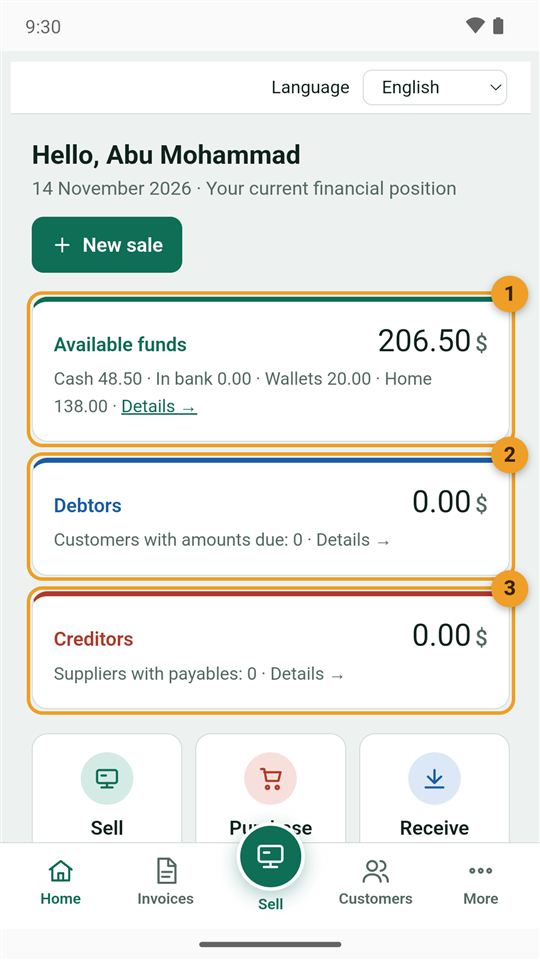
Home
- Available funds $206.50: $48.50 in the cash box, $20 in the wallet and $138 in the home safe.
- Debtors $0: he sells no credit.
- Creditors $0: the wholesaler is fully paid.
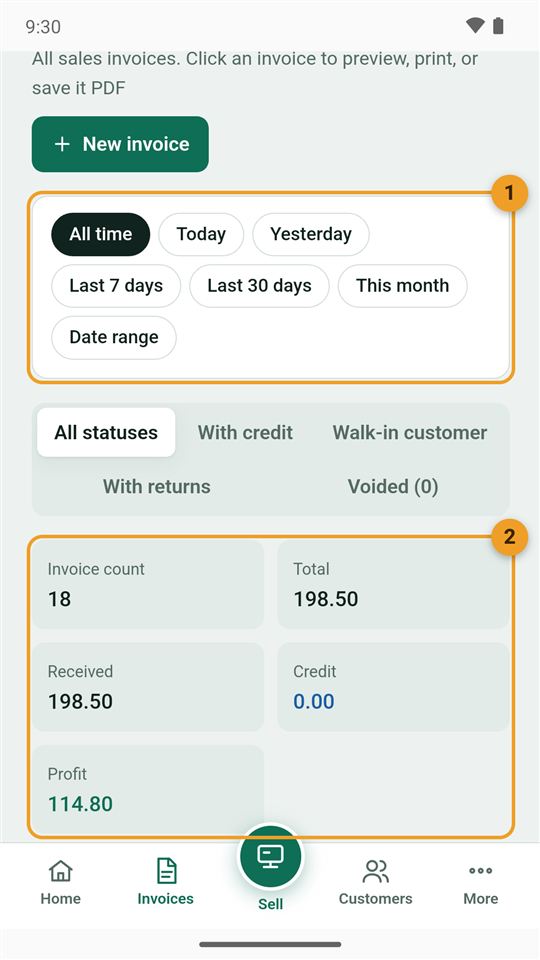
Invoices
- The period.
- The summary: 18 invoices for $198.50, all received.
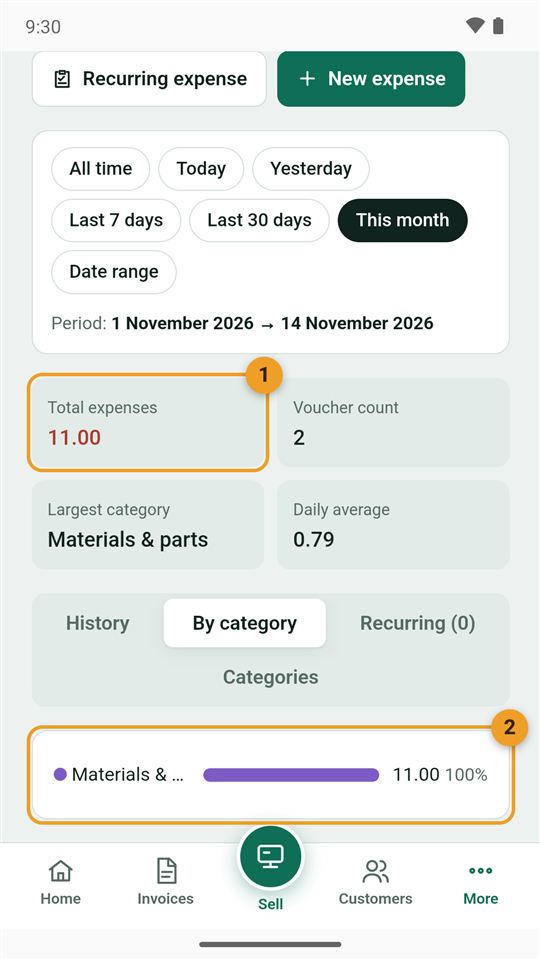
Expenses
- Total expenses $11.
- By category: charcoal $6, cups and bags $5.
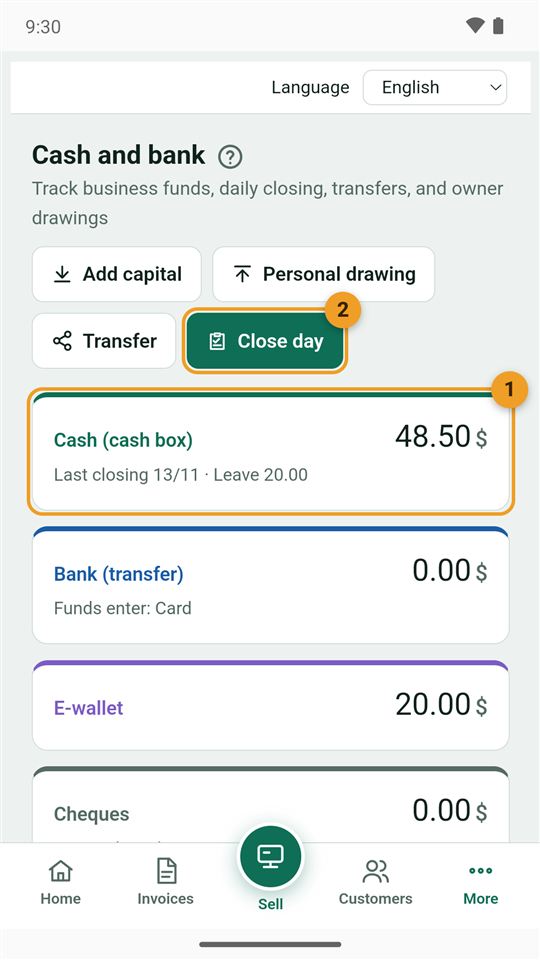
Cash
- Cash (cash box) $48.50.
- Close day.
Reports
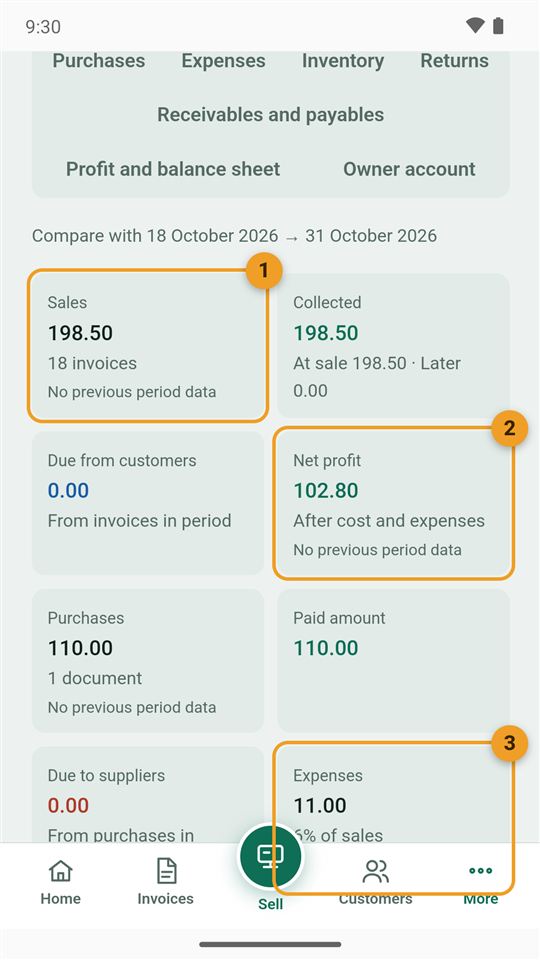
- Sales $198.50 in 18 invoices.
- Net profit $102.80 after the cost of goods and expenses.
- Expenses $11, 6% of sales.